EU5 New Player's Path: What to Learn First (and What to Ignore)
You just bought EU5, unpaused the game, and now there are about forty systems demanding your attention. This page is not another list of every system. It is a judgment about the order that works.
Some EU5 mechanics are gatekeepers. If you ignore them, your country falls apart and you never see the fun parts. Others only matter once you are stable and growing. Learn the gatekeepers first, skim past everything else, and the game stops feeling like drowning.
Here is how to use this path. Read the stage you are in. Click through to the guides when you are ready to act on them. Come back to this page whenever you feel lost again. Do not try to master everything at once. That is how you burn out.
Everything linked below is live in the game right now. No update previews, no speculative mechanics. If an article mentions changes that have not shipped yet, ignore that part in your first campaign.
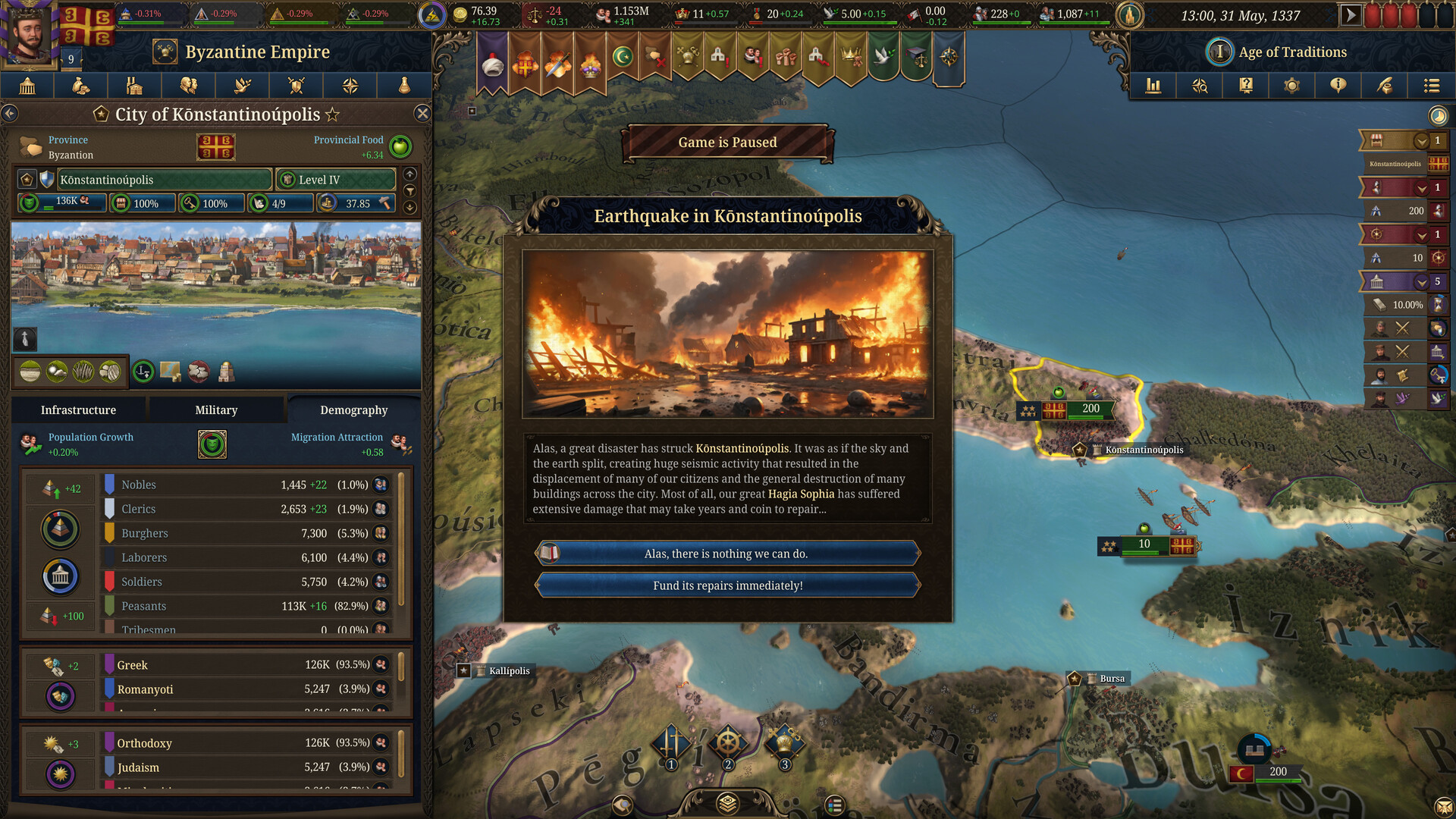
Source: Paradox Interactive / Europa Universalis V official screenshots
Stage 1: Orientation (before you unpause)
Start with the right mental model, because EU5 is not EU4 with a new coat of paint.
EU5 is a population game. Your provinces contain pops, and pops are the engine your whole country runs on. They produce your goods, pay your taxes, and supply your armies. When they are unhappy they produce unrest instead. Almost every other system in the game is a consequence of how your pops are doing.
If you are coming from EU4, this is the biggest thing you need to unlearn. You managed provinces in EU4. Here you manage pops, and pops have opinions.
Read this first: best starting nations for new players. Pick one of those, start a campaign, and do not worry about the later stages until you have unpaused.
What to ignore for now: army composition details, trade optimization, institutions, ages, deep diplomacy, and cabinet management. None of it will matter in your first hours.
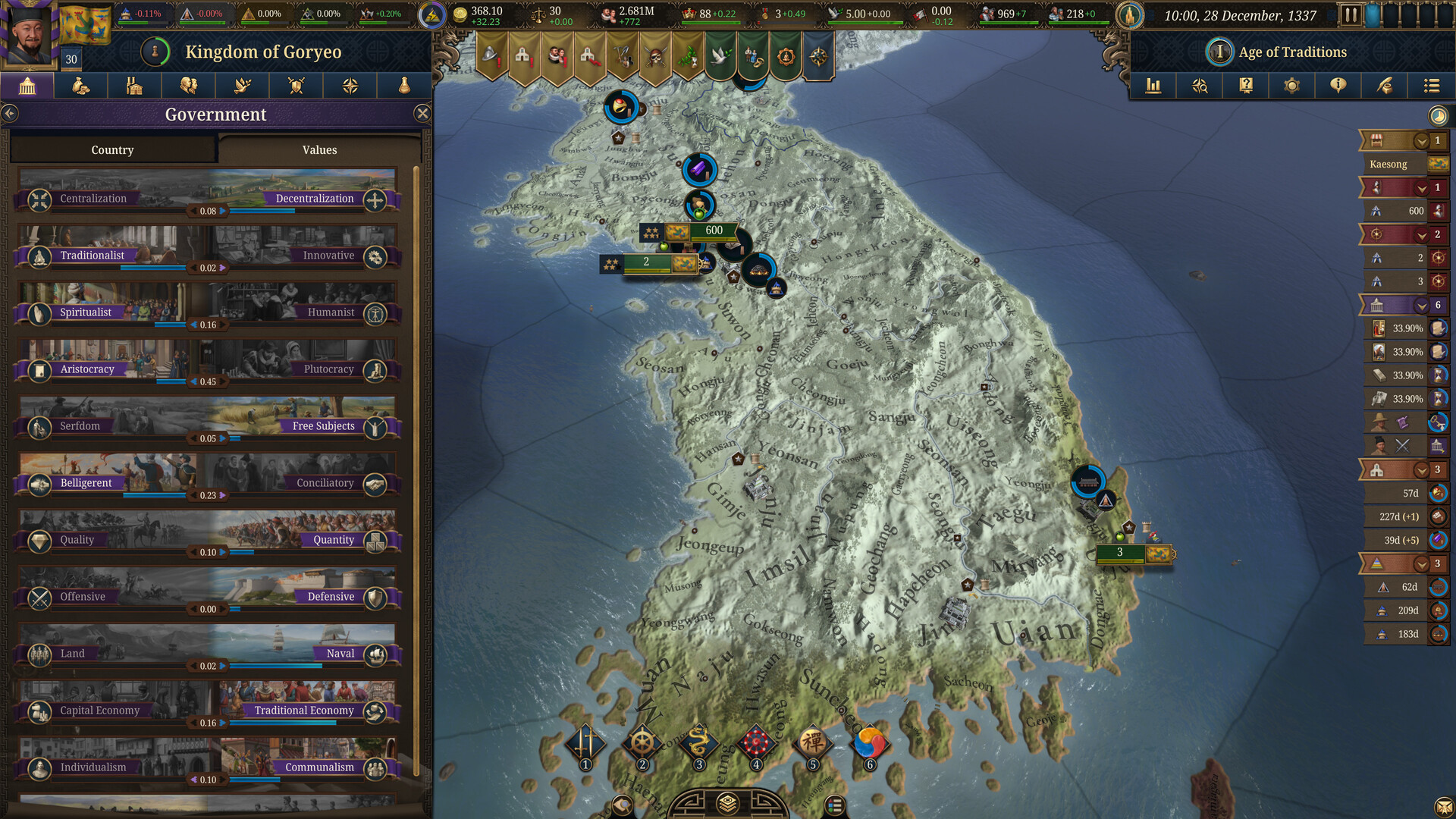
Source: Paradox Interactive / Europa Universalis V official screenshots
Stage 2: Foundation (what breaks the game if ignored)
Two systems sit underneath everything else, and both are worth learning before you look at the flashy stuff.
Pops are the root. How happy they are, what class they belong to, and what they produce decides whether your budget is healthy or your country is quietly falling apart. The pop system guide explains the basics in plain language.
Government types gate what you are allowed to do at all. Your government decides your succession, your laws, your reforms, and a lot of your privileges. You do not need to master it. You need to know what yours is and why it matters, and the government types guide covers exactly that.
It is also worth learning the basic economy loop now: where your income comes from and how you end up broke. The economy basics guide is the short version.
What to ignore for now: detailed estate privileges, unrest management tactics, and military composition. They come in the next two stages.
Stage 3: Stabilization (the danger zone)
Many new players find that estate satisfaction and unrest are the first real crisis they face once the campaign is underway. This stage is about surviving that.
Estates want privileges, and privileges cost you crownland and control. Learn what they actually want and what happens when you say no: how estates work in EU5.
Unrest is what happens when pops are unhappy and they stay that way. Let it stack and you get rebels, and rebels end campaigns. The unrest and estates guide shows you how to keep a lid on it before it boils over.
Underneath both of those sits culture and religion tolerance: the reason mixed-pop conquests turn rebellious in the first place. The culture and religion tolerance guide explains the mechanics in plain terms, and why accepting a culture temporarily is stabler than converting it by force the moment a war ends.
What to ignore for now: advanced military tactics, trade networks, institutions, ages, and deep cabinet optimization. Your country surviving is the goal, not min-maxing.
Stage 4: Growth (once you are stable)
This stage only starts after the country is not on fire. Now you can actually improve things.
You are going to fight wars eventually, so army composition comes first. It is one of the most important practical skills in the game and it is easy to learn badly. The army composition guide walks through it properly.
From there, round out the systems that make a country strong: societal values shape your laws and diplomacy, your cabinet and courtiers do the work of governing, parliament is where laws actually get passed, and the diplomacy guide covers the relationships that keep you safe.
What to ignore for now: nothing has to be off the table. Just go one system at a time and give each one a campaign to sink in.
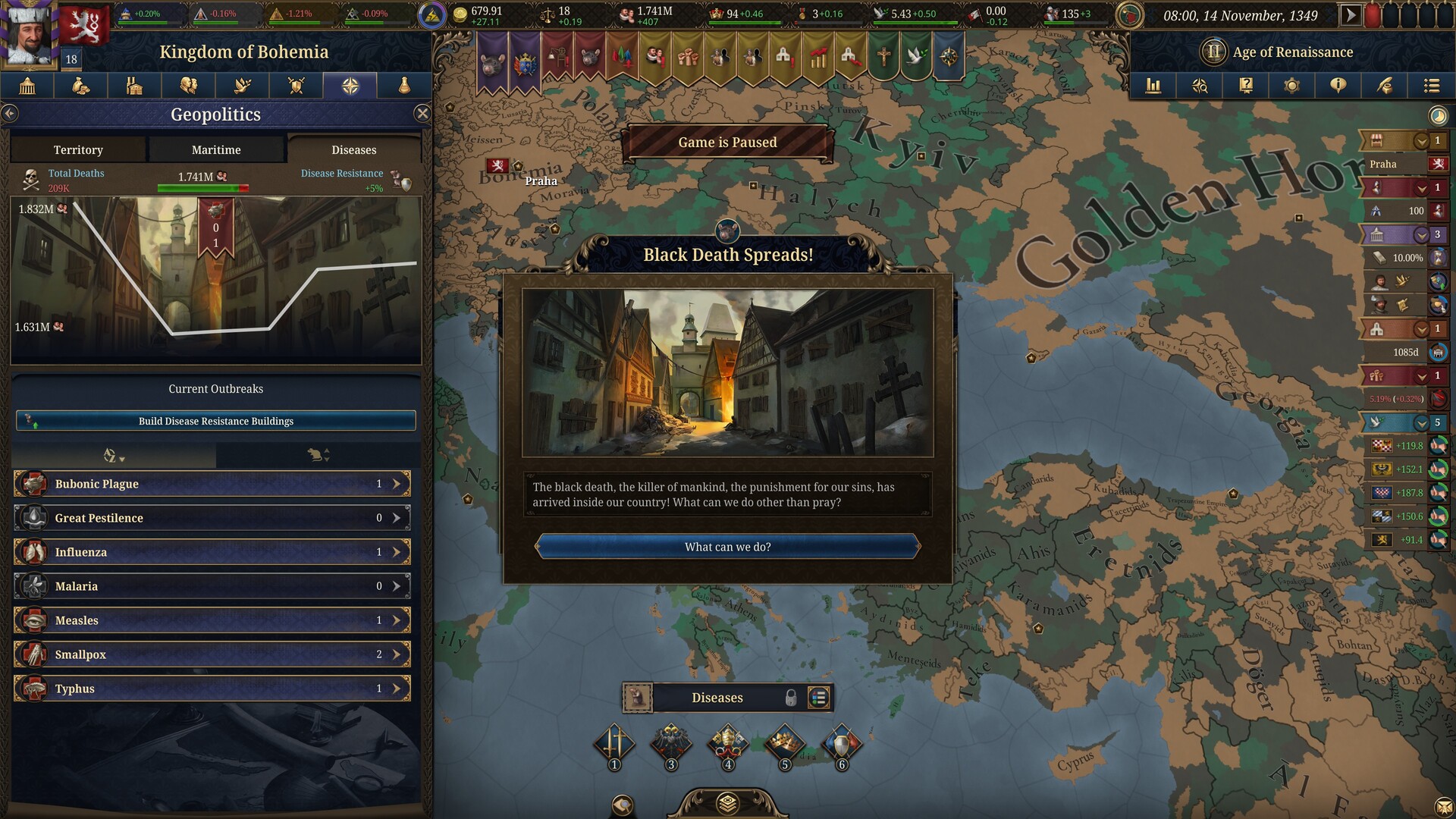
Source: Paradox Interactive / Europa Universalis V official screenshots
Stage 5: Depth (the long game)
These systems matter more as a campaign matures. You do not need deep mastery of any of them in your first campaign.
When you are ready to go deeper: ages, institutions, combat, sieges, naval warfare, and trade.
Each is useful, and each is the kind of system that rewards a second look after you have learned the basics elsewhere. Feel free to explore more freely now.
Where to go from here
The path does not go away when you finish it. Come back to this page whenever you feel stuck or overwhelmed again, use the stage you need, and keep moving. The goal is not to understand everything. It is to keep the country standing.