Understanding the Pop System in Europa Universalis 5
New to EU5? This guide is part of the EU5 New Player’s Path. If you are just starting, follow the Path in order instead of jumping between systems.
The pop system is the biggest new addition in Europa Universalis V, and it changes how the game plays in fundamental ways. If you’re coming from EU4, where provinces were abstract numbers, EU5’s pops will take some getting used to. Here’s what you need to know.
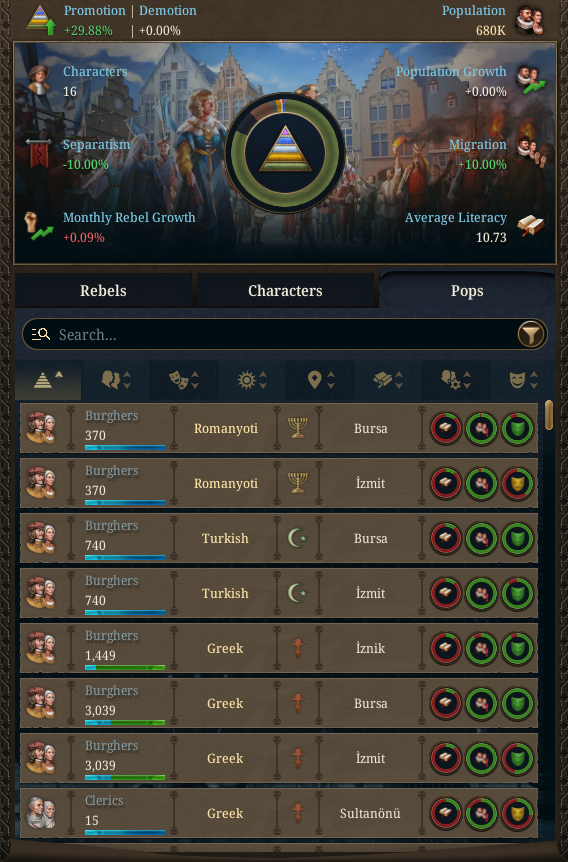
Source: Paradox Interactive / Europa Universalis V official screenshots (EU5 Wiki)
What Are Pops?
Pops are the individual population groups that live in your provinces. Each province has multiple pops, and each pop has:
- A social class: what they do (farmers, artisans, nobles, clergy, etc.)
- A culture: which cultural group they belong to
- A religion: what they believe
- A size: how many people are in the pop
- A happiness level: how content they are
The pop system is inspired by games like Victoria, Paradox’s other pop-based grand strategy, but adapted for the early-modern setting of EU5.
Why Pops Matter
Pops are the engine of your economy. They produce the goods, pay the taxes, and provide the manpower that your nation runs on. But they’re also the source of your problems. Unhappy pops cause unrest, refuse to pay taxes, and can even rebel.
The key insight: In EU4, you managed provinces. In EU5, you manage pops. It’s a more granular, more personal system.
The Social Classes
Each pop class has a different role:
- Farmers: produce food and basic goods. The backbone of your economy.
- Artisans: produce manufactured goods. More valuable than farmers but need resources.
- Burghers: the merchant class. Generate trade income and tax revenue.
- Nobles: the ruling class. Provide manpower and military bonuses but demand privileges.
- Clergy: the religious class. Provide stability and conversion but demand influence.
Different classes also respond differently to events. A tax increase hurts farmers more than nobles, while a war benefits the nobility at the expense of everyone else.
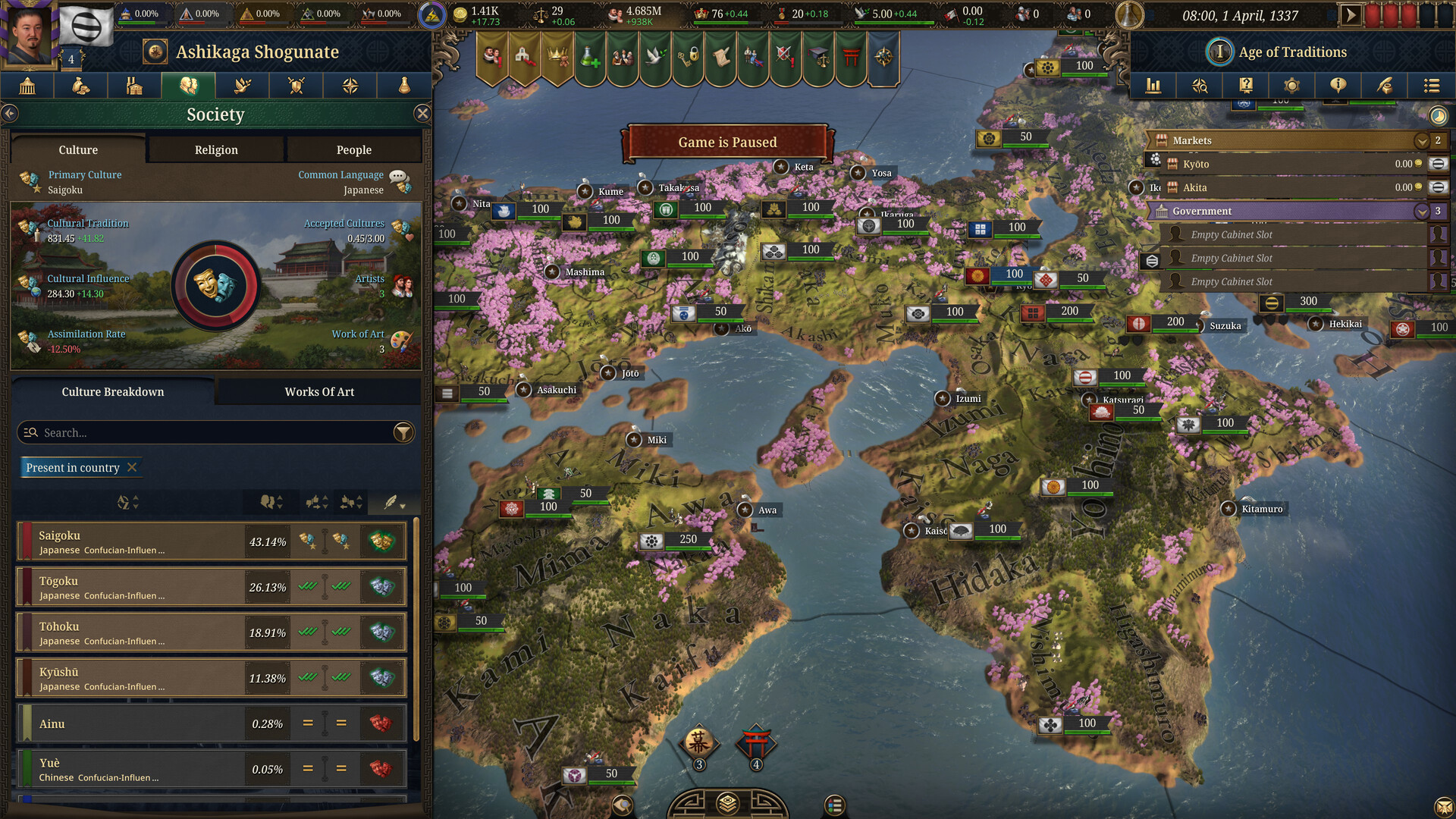
Source: Paradox Interactive / Europa Universalis V official screenshots
Managing Your Pops
1. Keep pops happy. Unhappy pops cause unrest and produce less. Watch their happiness levels and address the causes of discontent.
2. Promote pops strategically. You can promote pops to higher classes, turning farmers into artisans, for example. This increases their output but costs money and can cause short-term unrest.
3. Convert culture and religion. Pops of a different culture or religion are harder to keep happy. Use your clergy and administrators to convert them over time.
4. Balance your classes. A province with too many farmers and not enough artisans is underperforming. A province with too many nobles is unstable. Aim for a balanced mix.
The Economic Impact
Pops change how you think about your economy:
- Development is different. Instead of abstract development points, your economy is based on what your pops actually produce.
- Buildings matter more. Buildings improve pop output. A workshop makes your artisans more productive.
- Trade is connected. Pops produce the goods that flow through your trade routes.
The pop system is the heart of EU5. It makes the game more complex, but also more rewarding. You’re managing people, not just numbers. Keep your pops happy, promote them strategically, and balance your social classes, and your economy will thrive.
The key adjustment from EU4: think in terms of people, not provinces. Every decision you make, whether war, taxation, or buildings, affects your pops. Manage them well, and your nation will prosper.