EU5 Combat Explained
EU5 combat has a transparency problem. The game’s own wiki page is a wall of nested multiplication formulas, math notation, and unlabeled variables. It’s genuinely correct and genuinely detailed, and genuinely unreadable for anyone who isn’t already deep into the mechanics. A separate forum thread explains the real mechanics brilliantly, but it’s written for people who already understand the basics. Nobody has taken the middle ground and made this system accessible. That’s what this article is for. It’s also the natural follow-up to the army composition guide, since this is what actually happens once the army you built steps onto the field. Once you are ready to see these systems fight for real, try the interactive EU5 Army Battle Lab.
One quick caveat before the deep dive. The wiki’s combat page is tagged by its editors as potentially outdated, last verified for version 1.0, and the game has moved on through at least a 1.3 patch. The core systems here, phases, sections, engagement, flanking, frontage, are fundamental and unlikely to have changed shape. But treat specific numbers as illustrating how the system behaves rather than guaranteed current values.
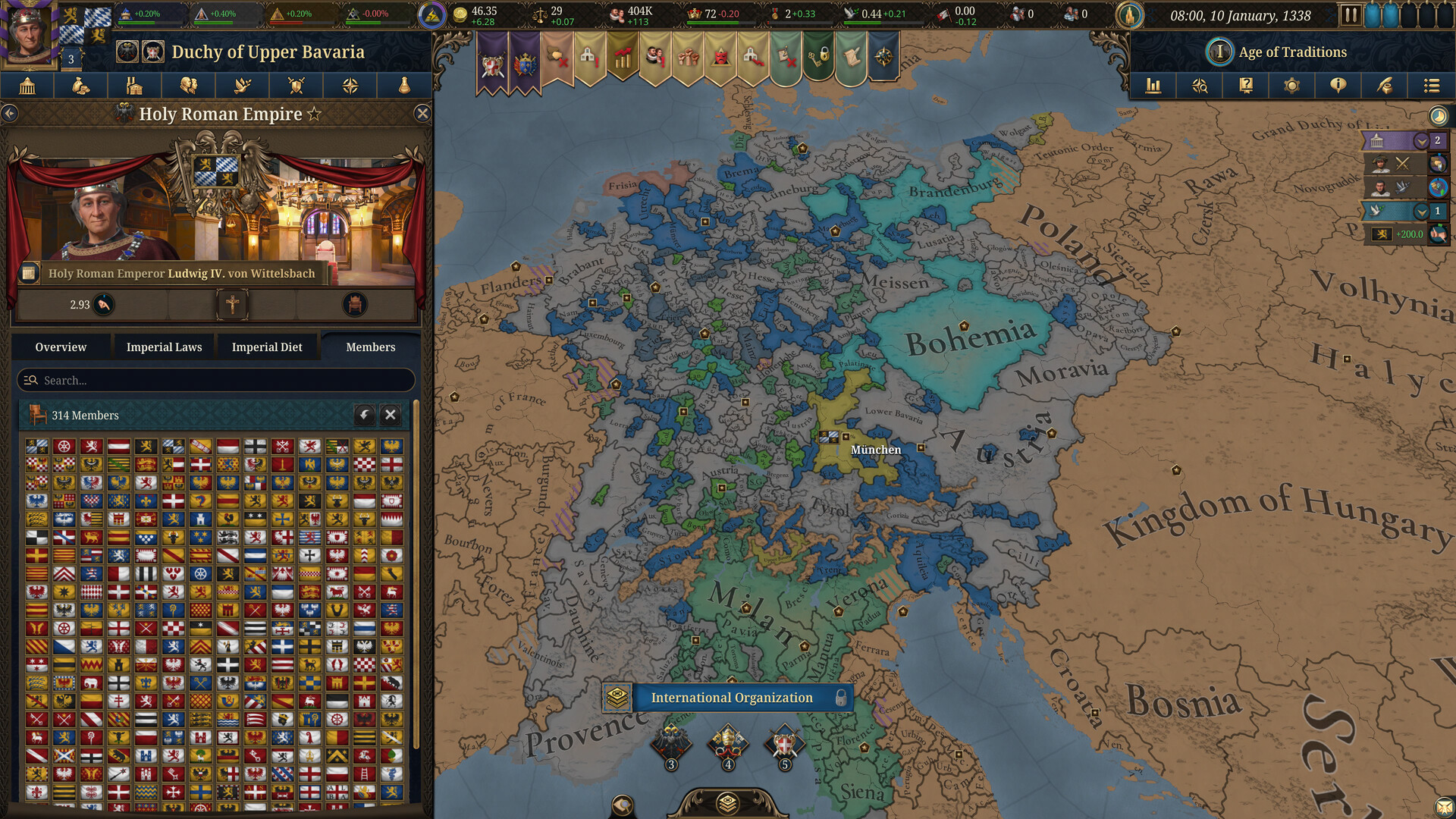
Source: Paradox Interactive / Europa Universalis V official screenshots
How a battle starts
One side attacks, one side defends. If the location has no fort, whichever army arrived first becomes the defender. If it does have a fort, the fort’s controller is always the defender, regardless of who got there first.
That’s the whole opening setup. It means the defender isn’t always the player who wants to defend, and it rewards thinking about who controls the forts in the path of your advance before you commit to a fight.
Phases, and the artillery opening
Combat is broken into repeating phases, each lasting five hours. In each phase, both sides roll a die, and the result determines how much damage gets dealt until the next phase rolls around.
If either side has artillery, the battle opens with a separate five hour Bombard Phase first. During it, artillery gets a chance each hour to strike a regiment before the main fighting even starts. So a force with artillery gets free shots at the enemy before any regular unit has swung a weapon, which is another reason the army composition guide pushes artillery so hard.
Sections, and what engagement really means
Every battle has a center, a left flank, a right flank, and a reserve. You assign your units to these positions before the fight begins.
Units placed in reserve aren’t just waiting around safely, and that’s the part people get wrong. The real mechanic to understand is engagement. A unit in the center or on a flank has an hourly chance to become engaged, meaning it locks onto a target and starts actually fighting. Until that happens it stays disengaged, and disengaged units take extra morale damage when attacked. The wiki lists this as a 1.2 multiplier for land units, twenty percent more morale damage.
I want to single that number out because a specific claim floating around community discussions says this is a flat two times, a double penalty. The current wiki text says 1.2 times for land combat. Use that number, and treat the two times figure as the rumor it is.
Frontage decides how many can actually fight
Here’s the mechanical reason a bigger army doesn’t automatically win. Only so many units can be engaged simultaneously in a given location, and that limit is shaped by the terrain itself. A large army just means more units waiting their turn or sitting disengaged and vulnerable, not more units hitting the enemy at the same moment.
So combat width is a real constraint, and it rewards quality over raw numbers once you’re past it. Bring enough to fill the front and hold the flanks, and funnel the rest where terrain lets them matter.
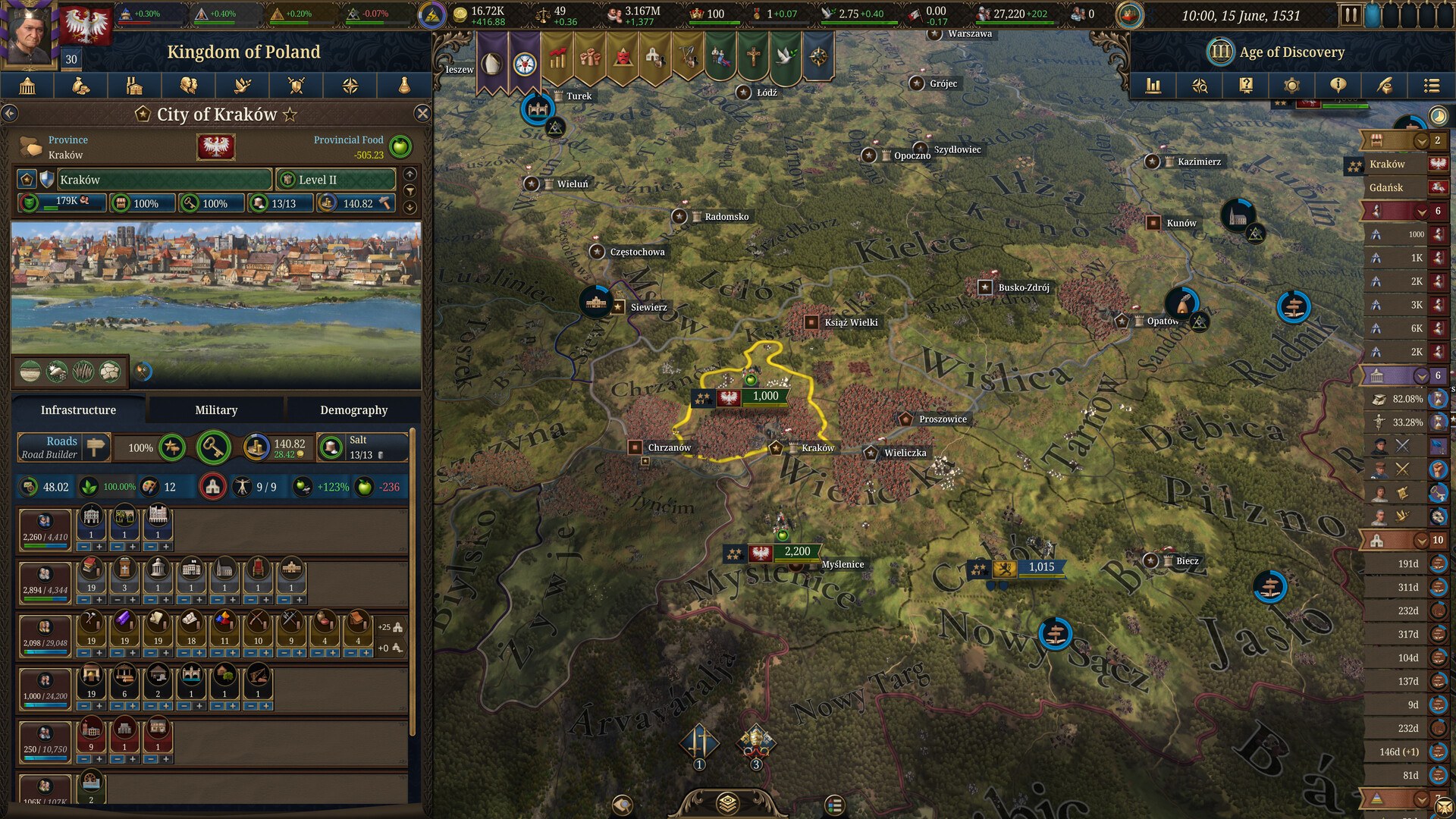
Source: Paradox Interactive / Europa Universalis V official screenshots
Terrain has real, specific costs
The wiki gives a clean example that makes this concrete. A mountainous woods location gives the attacker a -3 penalty to their dice rolls, -2 from the mountains and -1 from the woods, and reduces possible frontage for both sides by -6. Rivers cost an attacker -1 to their dice roll for crossing, and straits cost -2.
Those numbers illustrate why attacking across bad terrain into a prepared defense is such a brutal proposition. The dice penalty compounds every phase, and the frontage cut prevents you from bringing your numeric advantage to bear.
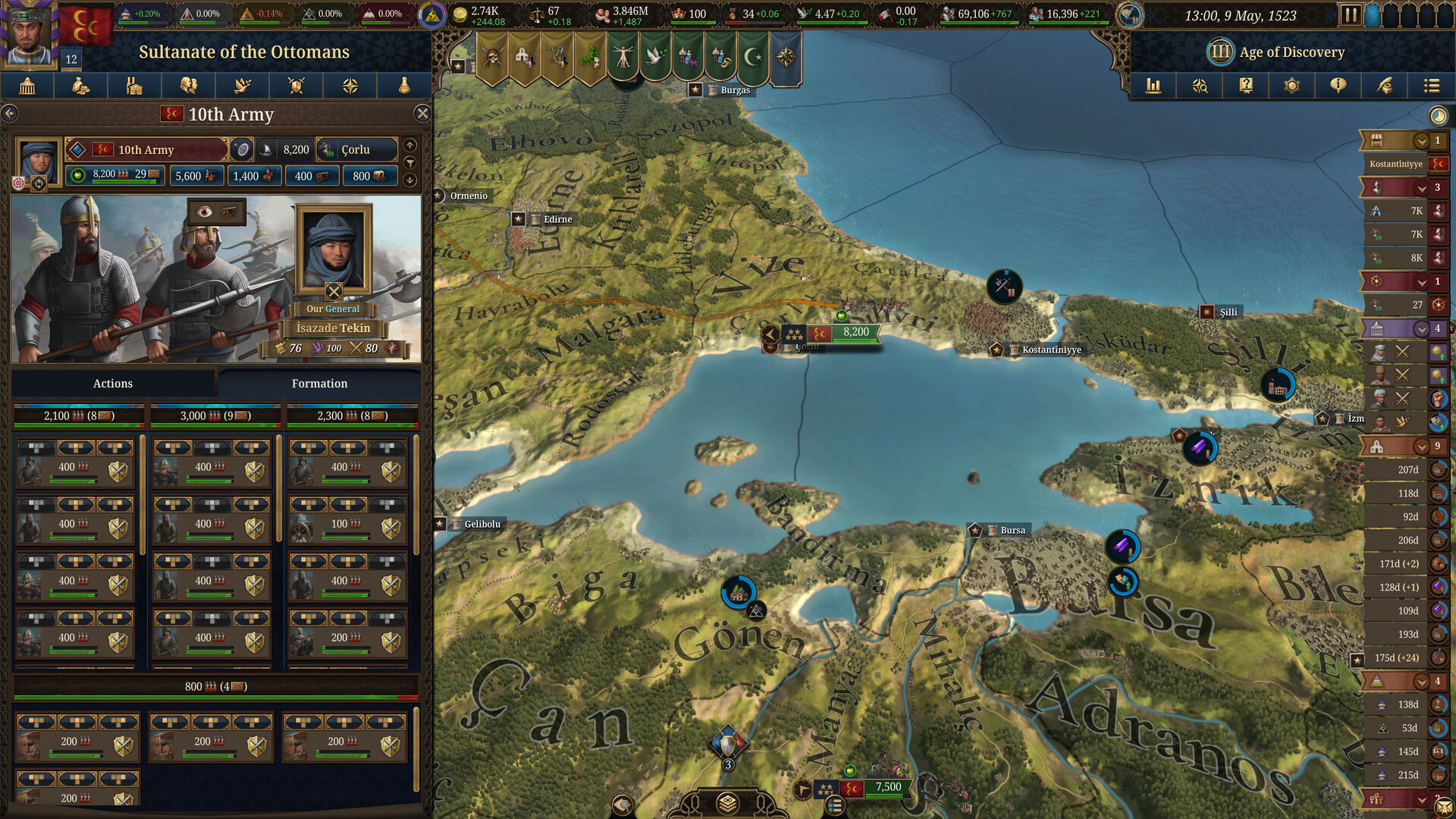
Source: Paradox Interactive / Europa Universalis V official screenshots
Flanking rewards maneuvering, not just numbers
Attacking a section your opponent isn’t actively defending lets your Flanking Ability stat apply as a damage bonus. The wiki states it plainly: 200% flanking ability is a full two times damage multiplier, while 100% means no bonus at all.
This is a real mechanical reason to actively think about where you’re attacking, not just how much you’re bringing. Hitting an undefended flank is worth dramatically more than piling onto a defended center, because the flank lets a modest advantage become a swing.
Levies vs the professionals
When levies attack Regulars, a Levy Combat Efficiency modifier applies, with a base value of 0.5. That’s the concrete number behind the general advice already in the army composition guide, levies genuinely punch below their stats specifically when fighting professional troops.
It also means army quality isn’t just about stacking more troops. A smaller force of regulars can hold its own against a much larger levy swarm, and converting levy numbers into regular quality is one of the strongest upgrades available.
The defensive stats that quietly win fights
Military Tactics divides incoming damage. The wiki’s own example states that a Tactics value of 2 is a 50 percent damage reduction. Army Experience works the same way, at 100 percent experience that’s also a 50 percent reduction in damage taken.
Veteran troops are mechanically tankier, not just better on paper. When the trade power of two armies is close, the one with higher tactics and experience absorbs half again the punishment, and that advantage snowballs across a long war.
Secure Flanks rewards balanced deployment
Having friendly troops in an adjacent section gives a defensive bonus, 10 percent for infantry in the center, 5 percent on the flanks, and it doubles if both flanks are secured. This is concrete encouragement to spread out across all three sections deliberately rather than stacking everything in the middle.
A balanced line isn’t just tidy, it’s statistically safer. Leaving a flank empty because you want a bigger center is giving away a permanent defensive bonus you could have kept.
The morale finding that changes how you pick generals
There’s a genuinely surprising community analysis worth taking seriously. A detailed breakdown on the official Paradox forum worked through a real combat example and found that morale damage is calculated using the attacking unit’s current Morale multiplied into the damage formula. A unit with high morale can deal dramatically more morale damage than raw troop losses would suggest, roughly fifteen times more in the example, despite the actual kill count only differing by about 2.6 times.
The same analysis noted that max Morale scales with a general’s Diplomacy skill, which means that stat might matter far more than most players assume. I’ll flag this honestly as one detailed player’s tested analysis, not an official developer-confirmed number, since it isn’t stated directly on the wiki. But it’s exactly the kind of finding that changes how you’d actually pick a general, not just flavor text.
What this means for your next war
Combat in EU5 is a system of layered constraints and bonuses. Terrain cuts your dice and your frontage, flanks reward a numerical overhang on the right spot, levies fold against regulars at a known rate, tactics and experience halve incoming damage, and sometimes a high-morale army simply floors the enemy before casualties even tell the story. Sieges are a separate system entirely, and they deserve their own article, but the field battle is where all of these pieces collide.
None of this says you can ignore army composition. It says the army you build is just the raw material, and how you deploy it, where you hit, who leads it, and how much morale it carries decides what that material actually accomplishes. Build the right force, and then spend as much time aiming it as you did building it.
Try It Yourself
The best way to internalize these mechanics is to see them fight. Our EU5 Army Battle Lab lets you build an army against an AI opponent with equal resources, watch the fight resolve phase by phase, and get an autopsy of what worked and what did not.