EU5 Parliament Explained
Parliament is the mechanic this site keeps referencing without ever explaining. The Political Influence guide mentions spending 75 Political Influence for 25 Parliament support. The Estates guide covers estate power without covering what estates actually do with it in the chamber. And the court conversation around raising a new character from an estate points at a Parliament activity that never gets unpacked. This article is the piece that connects all three, and it’s about time it got its own explanation.
One quick caveat before the sessions begin. The EU5 wiki’s Parliament page and its Government pages are both tagged by their editors as potentially outdated, with sections last verified for a pre-release build, and a Patch 1.3 changelog entry confirms Parliament mechanics are actively being tuned. The shape of the system is solid, so treat it as a reliable map. But specific numbers may shift between patches, and that’s expected rather than a flaw in the guide.
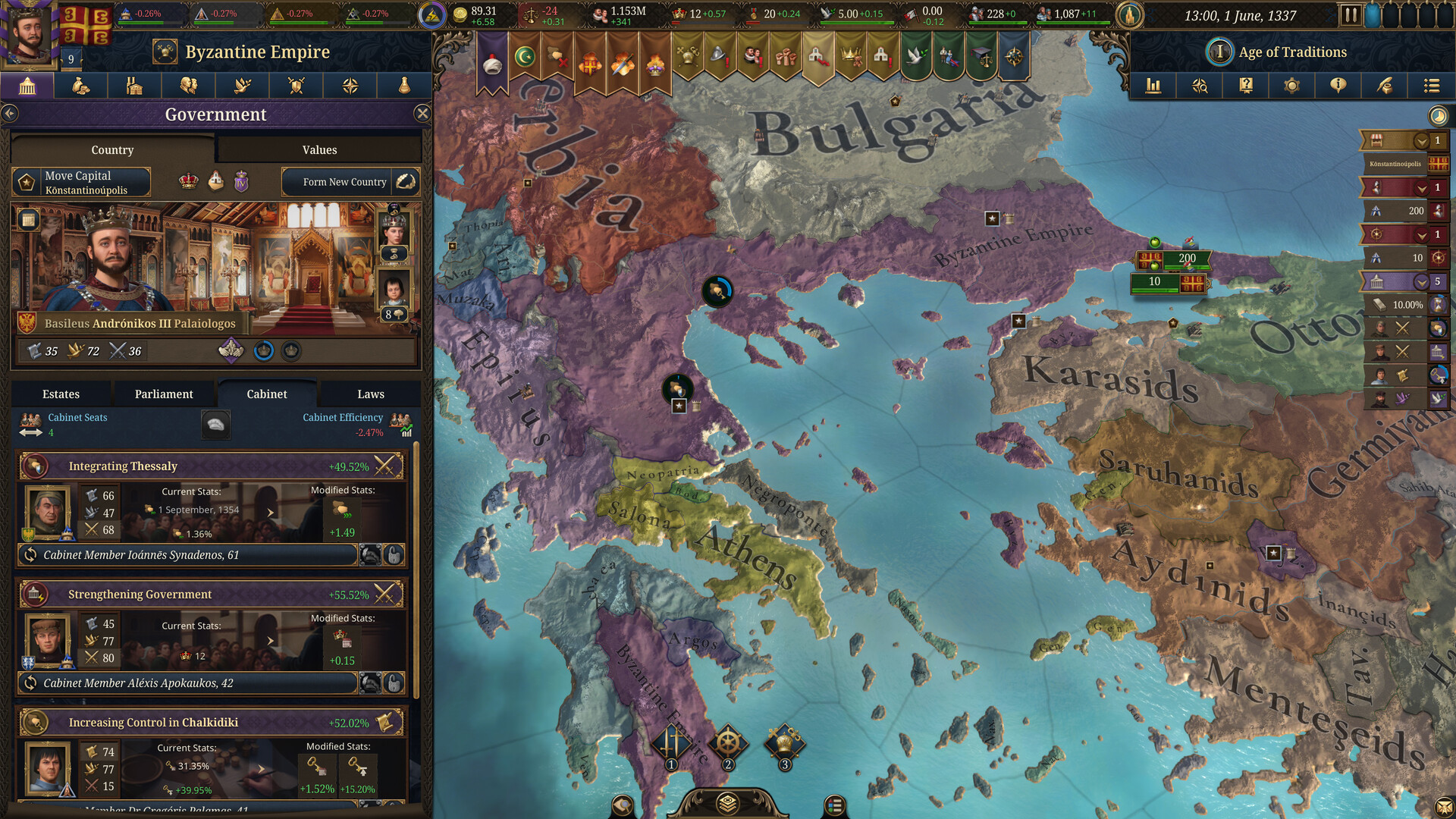
Source: Paradox Interactive / Europa Universalis V official screenshots
What calling Parliament actually lets you do
A session of Parliament is not a single-purpose screen. When you call your estates together, you can use the session to create a Casus Belli, raise taxes, increase your Army Levies and Naval Levies, or change any of your current laws. That makes it a genuinely multi-purpose tool, one session can resolve a problem that would otherwise cost you several separate resources.
You don’t get unlimited sessions. Parliament can be called every five years, so each one is a scarce opportunity rather than a button you press whenever something annoys you.
Agendas, and the support wall you have to climb
Before any estate will pledge its support to your session, that estate may have a Parliament Agenda that has to be resolved. You can’t just walk in and expect a blank check. Whether an agenda passes or fails depends on estate power, each estate either supports or opposes the issue, and whichever side it picks, it adds its estate power to that side of the scale. The estate that originally proposed an issue always supports it automatically.
There’s also a hard cap on how much any single estate can push. Each estate can propose up to two Parliament issues at a time, so a powerful estate can flood the agenda, but only so far. If you want the full picture on how that power is built and balanced in the first place, the Estates guide has the deep dive, this is where that power actually gets spent.
The stakes are concrete, and they’re not symmetric
If a Parliament agenda passes, the country gains a bonus. If it fails, the country loses a flat 7 Stability. That is the single number worth remembering from this whole system, failure is not a shrug and a move on, it is a meaningful stability hit that costs real resources to recover.
What a passing agenda can actually do is deliberately varied. Accepting an agenda costs varying amounts of Stability, and in exchange it can shift societal values, enact a policy, affect opinion with another country, or reduce taxes on the supporting estate for five years. There is no single fixed reward, so don’t plan around one number. The range is the point, sometimes you’re shaping your nation’s values, sometimes you’re buying a diplomatic opening, and sometimes you’re quietly paying off the estate that keeps your treasury full.
The neglect penalty that sneaks up on you
Parliament has a timer in the background that most players never look at. If Parliament hasn’t been called within the last 120 months, that’s 10 years, then every month after that, all estates lose 1% Satisfaction Equilibrium. It’s a slow bleed rather than a cliff, which is exactly why it’s easy to ignore until it has already cost you real estate satisfaction.
That quiet tax is the kind of mechanic this genre is full of. It never makes a scene, it just makes every estate slightly unhappier than it should be, month after month, and ten years later you wonder why your realm feels harder to manage than it used to. A single Parliament session every decade is a cheap insurance policy against the slow grind.
Location matters, and so does the war map
You don’t have to hold Parliament in your capital. It can take place in the capital or in another location, and holding it elsewhere gives that location some small extra benefits. Choosing a seat is a real decision, not a cosmetic one.
The risk is that if the chosen location becomes occupied during a war, the Parliament fails outright. Calling a session in a border province while you’re fighting an active war is a genuine gamble. If that province gets taken, you lose the session and whatever you were trying to accomplish with it. If you’re planning to use Parliament to raise taxes or change a law right when a war starts, that’s a strong argument for holding it somewhere that won’t be on the front line.
Parliament type decides who gets a voice
Which estates can propose agendas depends on your Parliament type, and that type is something you choose and can change. It costs 50 Government Power to switch, so it’s not something you’ll be toggling every session, but it’s a real lever when your realm’s balance changes.
One constant cuts across every type: the Nobility estate can always suggest agendas, regardless of what kind of parliament you run. Even if you pick a type that explicitly favors commoners or the clergy, the nobles still get their seat at the table. That’s worth knowing before you build your whole strategy around shutting them out.
The Crown Power link you should actually use
Initial Parliament Support is raised mainly by Crown Power, with laws, government reforms, and advances able to add to it as well. And here’s the link the Political Influence guide already set up without this article existing to close it: Political Influence is what raises Crown Power in the first place. A well-managed Political Influence economy makes your Parliament sessions go more smoothly before you even walk into the chamber, because the support you’re starting with is higher when your crown is strong.
That’s the connective tissue this site has been pointing at for three separate articles. Political Influence feeds Crown Power, Crown Power feeds initial Parliament support, estate power decides whether your agendas pass, and the whole loop sits on top of the estate management the Estates guide covers. It all runs through this one screen.
The Holy Roman Empire does its own thing
One acknowledgment before the summary, because it’s a genuinely separate system. The Holy Roman Empire has its own, more elaborate Parliament called the Imperial Diet, with seven special statuses that carry voting power and its own set of laws that only the organization’s leader can propose changing, each requiring a full year of debate. If this site ever covers the HRE in depth, that breakdown belongs in its own article. For now, the short version is: if you’re playing inside the Empire, don’t assume your normal Parliament rules apply, you’re dealing with a different game entirely.
A Parliament routine worth keeping
The practical takeaway from all of this is that Parliament rewards a routine, not a drama. Call it at least once every decade to keep the neglect penalty from bleeding your estates dry. Hold it somewhere defensible if there’s even a chance of war. Keep your Political Influence healthy so your Crown Power starts every session ahead. And remember that each estate can only propose two issues but the Nobility always gets a vote, so spend your estate power where it actually decides an outcome.
The three articles that referenced Parliament on this site were all correct. Political Influence really does buy support, estate power really does decide agendas, and the court really does use Parliament to raise characters. Now that this guide exists, the loop between them has a home.