EU5 Navy Guide: Best Ships, Naval Combat and Maritime Presence (Patch 1.4)
This EU5 navy guide is written for patch 1.4, with the ship tables and combat math verified against the current wiki. Most older naval advice was written before the strait and enclosed-sea mechanics settled, and a lot of it is simply wrong now. This one gives you the numbers that matter, then tells you what to actually build for your theatre.
Source: Paradox Interactive, official EU5 Steam screenshot
Why navies matter more than you think
EU5 trade income runs through Maritime Presence. Without enough presence in a sea zone, your trade power dries up, your coastal control drops, and your merchants earn a fraction of what they should. Our EU5 trade guide covers the income side of that equation in detail. Navies are not a luxury you build when you feel rich. They are the difference between a country that feeds itself and one that pays tribute to everyone else’s markets.
A navy also protects your coast from blockade. A hostile fleet parked on your shore cuts food inflow, reduces control, and can swing a war more than any single battle. If you play a coastal nation and ignore ships, you are giving the AI a lever it will use.
How naval combat actually works
Naval damage compares the attacker’s Cannons against the defender’s Hull. A ship with more cannons than an enemy’s hull size earns a damage bonus that grows with the gap. The classic example the game’s own math produces: 9 cannons against a 6 hull target is roughly a 50% damage bonus, because the hull would need to grow by half to match. Flip it and the same math works against you.
That is why Heavy Ships feel unfair in a straight fight. A Galleon carries 60 cannons and 30 hull. A Galleass carries 16 cannons and 10 hull. Even in Narrows, where galleys get their +50% damage bonus, the cannons-versus-hull math still favors the heavy ship. More hulls sounds like more damage. What actually decides the fight is cannons against hull, and Heavy Ships win that comparison hard.
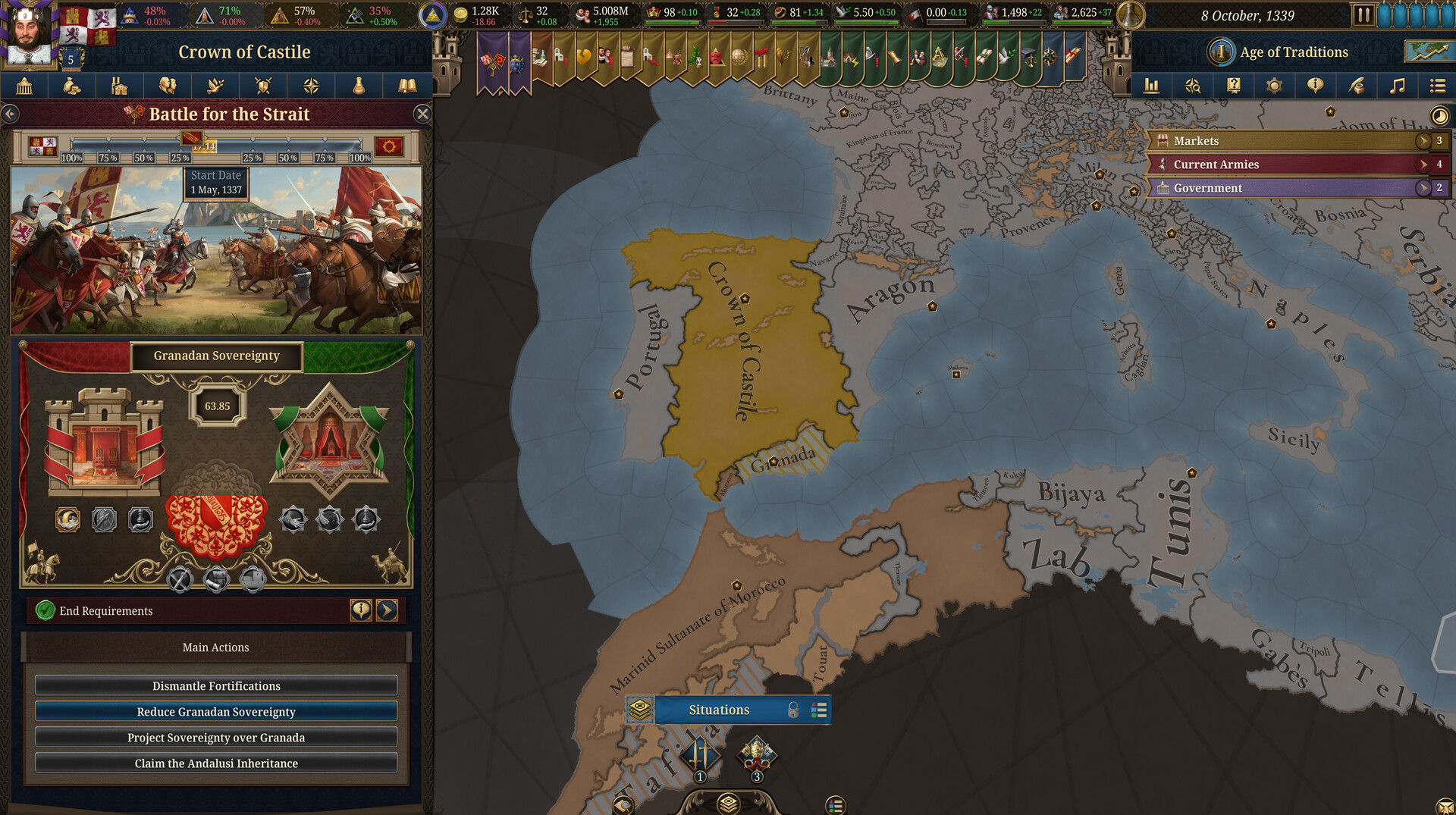
Straits matter too. Crossing into a location through a strait gives the attacker a -2 dice penalty in battle. Combined with the right terrain, that makes chokepoints genuinely defensible, which is what makes the Mediterranean and the Baltic feel different from the open ocean.
Ship types: galleys vs heavy ships vs light ships
There are four ship categories and only three that fight.
Galleys are the budget combat ship. They cost the least, use the least Frontage (0.5), and get real terrain bonuses: +50% damage in Narrows and +25% in Inland Seas. Take them into open Ocean and the bonus flips to -50%, or -100% in Deep Ocean. The current stat line runs from the Traditional Galley (8 cannons, 6 hull) up to the Galleass (16 cannons, 10 hull).
Heavy Ships carry the most cannons and the biggest hulls. The line runs from the Early Carrack (40 cannons, 20 hull) through the Carrack, Galleon (60/30), War Galleon (70/40), Two-decker (100/50) and Three-decker (120/60). They are the best ships in a straight fight, full stop. They are also the most expensive to build and maintain, and their Maritime Presence is low for the cost.
Light Ships lose straight fights to almost everything, but they are the best at everything peacetime: Maritime Presence, trade protection, blockading. Their line runs from the Barque (8/6) through the Brig (20/16), with blockade capacity up to 2.50 on the Brig. If a fight breaks out while a light ship is doing its real job, let it run. Do not feed it to a battle line.
Transports exist to carry troops. They have token combat stats and nobody should plan around them.
The naval system now
The current tables are verified against the combat wiki’s 1.3-era data, and two things stand out. One, terrain is the whole game for galleys: they are a regional weapon, not a universal one. Two, Frontage decides how many ships actually fight. Galleys use 0.5 Frontage per hull, Light Ships use 1, Heavy Ships use 1.5. Build around a choke point and galleys give you the most guns per slot. Build for an ocean war and they punish you for it.
Ship upkeep is also real. Every ship in port that is damaged will attempt repairs, drawing Sailors and Gold. Sailors are a separate pool from manpower. Run out and your navy stops being replaceable. Beyond your Naval Range, navies take attrition every month at sea, so do not park a fleet on the far side of the map expecting it to stay healthy.
Fleet templates by theatre
- Mediterranean and Baltic (enclosed seas): 60% galleys, 40% heavies. The galley terrain bonus does real work, and heavies anchor the line when the fighting reaches a strait.
- Atlantic (open ocean): 60% heavies, 40% light ships. Ocean penalties make galleys a liability. Light ships keep presence and blockade while heavies fight.
- Indian Ocean: heavies for war, light ships for trade. Maritime Presence decides who owns the routes to India, and that is a light-ship war.
- Anywhere you want to tax trade: a standing light-ship squadron beats a standing galley fleet for income every time.
Maritime presence and how it feeds your economy
Source: Paradox Interactive, official EU5 Steam screenshot
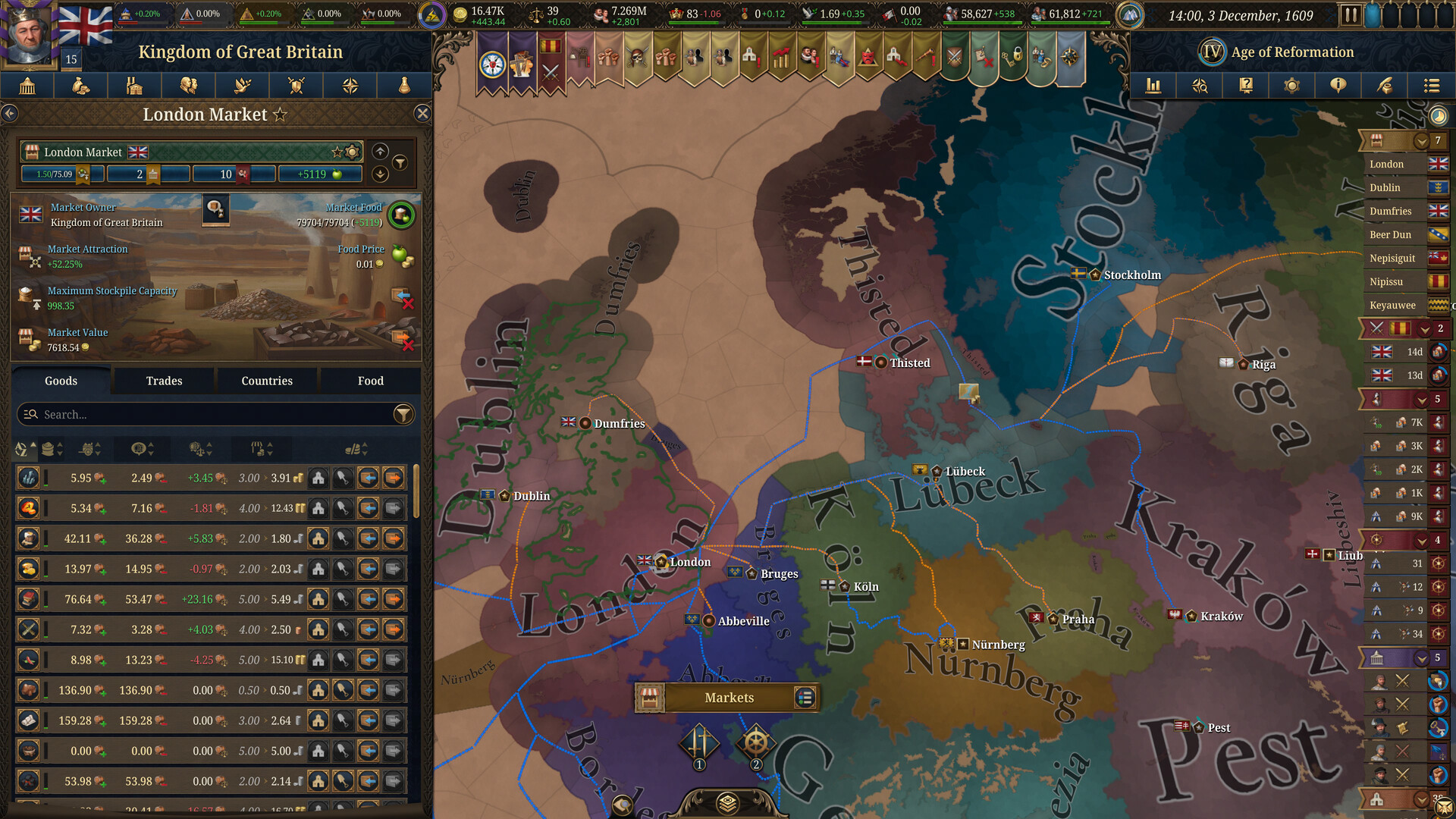
Maritime Presence is the stat that decides how much naval influence you project in a sea zone. It feeds directly into Proximity, which drives both colonization reach and trade access. Light ships give the most presence per ship: a Barque gives 0.14, a Brig 0.32. A galley gives around 0.08 to 0.14. A heavy ship gives more raw presence but costs far more to keep afloat.
The practical read: your peacetime navy should be built around light ships, sized to hold the presence you need in the sea zones you actually trade in. Build heavies when you plan a war, and mothball them when the war ends, because maintaining a heavy fleet in peacetime burns gold and Sailors for nothing. If the treasury side of that is new to you, our EU5 economy basics guide explains where income and expenses come from.
Common mistakes (with the fix for each)
- Building galleys for an ocean campaign. Fix: check your theatre first. Galleys are a trap outside enclosed seas.
- Using light ships as a battle line. Fix: keep them on presence and blockade, and let heavies take the fighting.
- Ignoring Sailors until the dock is empty. Fix: watch the Sailors pool like you watch manpower. It is a separate limit and it refills slowly.
- Leaving a full heavy fleet active in peacetime. Fix: mothball it. Bring it out for the war you planned, not for the war that might happen.
- Forgetting blockade capacity exists. Fix: when a siege needs to end, a blockade improves the pressure. A Brig with 2.50 blockade capacity is worth more than a carrack that cannot blockade.
Those same mistakes have a land twin: feed a battle line the wrong units and it fails the same way. Our EU5 army composition guide covers that half of your war.
FAQ
Are galleys ever the right call?
Yes, in enclosed seas. The +50% Narrows bonus and the +25% Inland Sea bonus are real. In the Mediterranean, Baltic, and similar waters, a galley fleet is a legitimate strategy. In the open ocean it is a losing one.
Do I need a navy if I play a landlocked country?
Not for trade, but once you expand to any coast you want a light-ship squadron to hold Maritime Presence and protect new coastal holdings. It is also the cheapest way to keep a hostile fleet off your shores.
What is the single most important ship stat?
Cannons versus Hull is the combat core, but Maritime Presence is what makes a navy pay for itself. A fleet that only fights is a fleet that costs money while it waits.
How does repair work?
Damaged ships in a port you own, or a port that granted you Fleet Basing Rights, repair automatically and draw Sailors and Gold while they do.
What to read next: our EU5 trade guide shows what maritime presence feeds once your fleets are working, and the EU5 army composition guide covers the half of a war your ships cannot reach.