EU5 Loans and Government Bonds Explained: Debt, Creditworthiness and Bankruptcy (Patch 1.4)
This EU5 loans guide is written for patch 1.4, with the loan, bond, and bankruptcy mechanics verified against the current wiki and game files. Debt is the fastest way to win a war you cannot afford, and the fastest way to ruin a country you spent fifty years building. The difference is understanding what borrowing actually costs you.
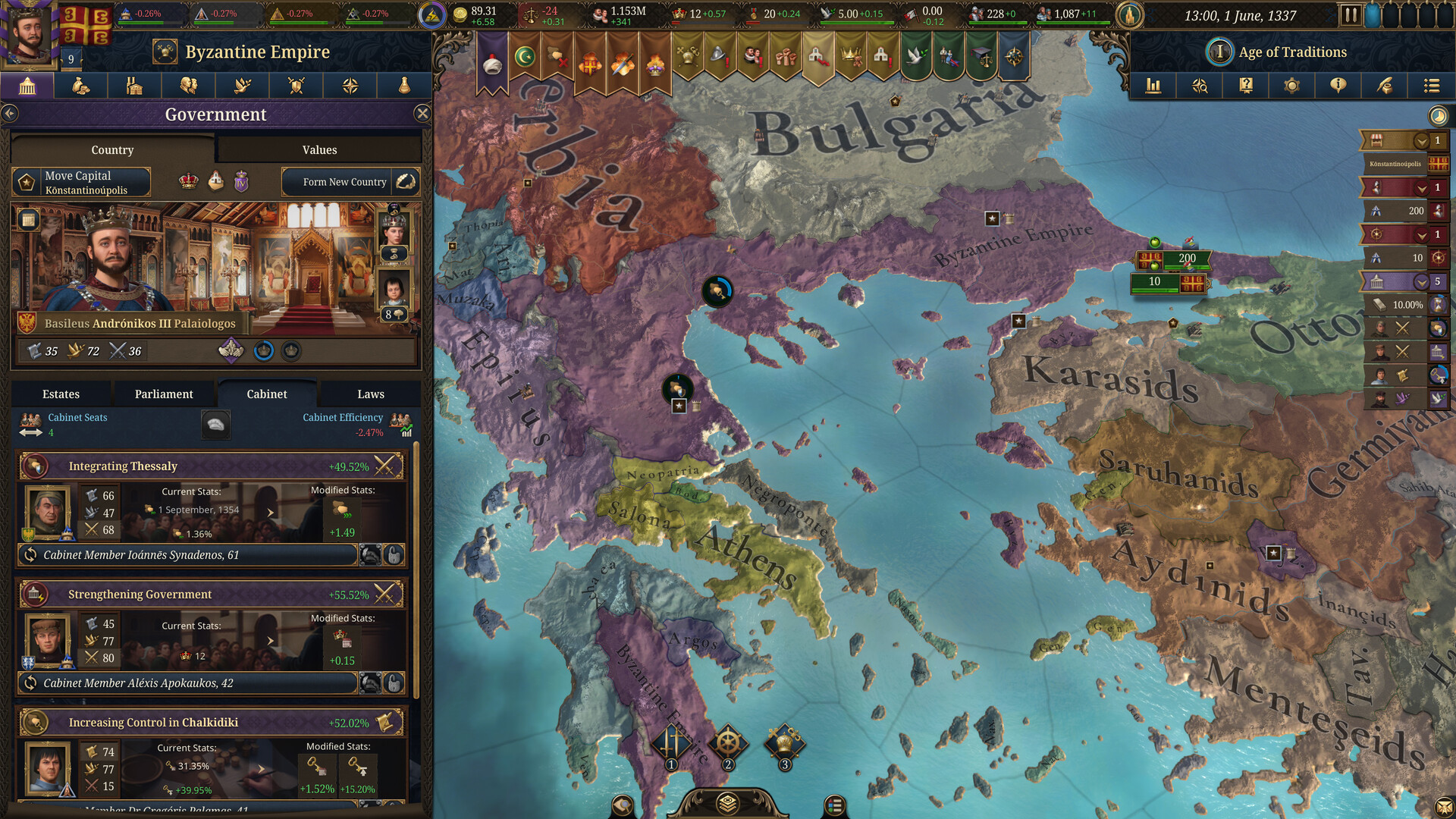
Source: Paradox Interactive, official EU5 Steam screenshot
How loans work in EU5
A loan is an instant sum of gold you can take, repaid in monthly installments over a fixed span with interest on top. The base interest for every country is 10%. The whole value of everything you owe, meaning every loan still being repaid, is your debt. Interest you pay on loans you took shows up as an expense line. Interest a country pays to you, because you lent it money, shows up as income. Both sides of that equation matter more than most players realize.
Two separate loan sources exist, and you access them differently:
- Borrow from your estates. Left-click the loan button and you take gold from the estates. There is a finite pool here, so you cannot live off estate loans forever.
- Borrow from banking countries. Right-click the loan button and you get a list of banking countries in diplomatic range. The size of the loan depends on what that banking country can actually afford to lend.
If you end a month with negative gold, the game automatically takes a loan for you. If there is nothing left that you can borrow, your country declares bankruptcy. That automatic fallback is worth remembering: a temporary dip that looks harmless can snowball into a full collapse if you had no borrowing room left.
Borrowing from estates vs banking countries
Estate loans are the safer default. They are simple, finite, and do not drag foreign powers into your finances. The catch is that the pool is limited, and heavy estate borrowing can strain estate satisfaction over time.
Banking-country loans scale with what the lender can afford, which means the richest banking countries can offer serious money in a crisis. The trade-off is that they connect your finances to a foreign country. That matters in patch 1.4, where the confirmed Default on Creditor action exists: you can repudiate every loan from a chosen lender, taking a hit to creditworthiness and to diplomatic opinion with all lenders, and the former creditor receives a Casus Belli against you. It is an escape hatch, and it comes with a price you should treat as a last resort.
Government bonds explained (what 1.3 added)
Loans are not your only channel anymore. Government bonds are the second one, and they run on a different shape: a capped capacity with its own interest rate.
Your bond capacity starts at 1 outstanding bond, and almost everything that raises it also improves your terms. The Debt and Loans advance in the Renaissance age adds one, as do National Bank, Stock Exchange and Insurance Companies later on. Central Banking adds five. Building a Central Bank, Riksbank or Wisselbank in your capital adds ten each, and Great Power status adds two more.
Bond interest starts at 5%, paid monthly on every bond you have outstanding. Creditworthiness is the same lever it is for loans: a healthy rating takes 4% off your bond interest and 5% off bank interest. Each capital bank building takes another 1% off bonds. The Debt and Loans advance itself lowers bank interest by 1% while adding that first bond slot, and the game sells it in one line: an organized debt market will allow us to float loans at a lower interest rate.
The strategic read: bonds are the cheap, capped debt, so open with them for long-term money and keep bank and estate loans for the war that cannot wait. Both channels get cheaper as your creditworthiness rises, which is the real argument for managing debt before a crisis rather than during one.
Interest and repayment math
A worked example, using the confirmed 10% base interest. Take a 1,000 gold loan at 10%: you owe about 100 gold in interest on top of the principal, spread across the monthly installments over the loan’s term. So the real cost of that loan is roughly 1,100 gold, not 1,000. The longer the loan term and the more loans you stack, the more of your monthly income gets eaten by interest installments before you see a single ducat of new spending.
The rule of thumb that has held up across every version of this system: only borrow when the loan pays for something that earns more than its interest. A loan that finances a war that wins you a rich province can pay for itself. A loan that finances a static army parked at home just adds a bill.
Creditworthiness under patch 1.4
Creditworthiness is the stat that governs who will lend to you and on what terms. Keep it healthy and banking countries offer bigger, cheaper loans. Tank it and your borrowing options narrow just when you need them most.
Patch 1.4 adds the tools to manage the relationship between debt and reputation directly. The Default on Creditor action is the clearest one: walk away from a lender, eat the creditworthiness and opinion penalties, accept the Casus Belli, and clear the debt. It is a deliberately harsh button, and it is there to stop debt from being a free answer to every war.
Bankruptcy: what actually happens, and how to avoid it

Source: Paradox Interactive, official EU5 Steam screenshot
Bankruptcy triggers when you have loans and either declare it manually from the Current Loans menu or the game forces it because you are in negative gold with nothing left to borrow.
What it does is brutal, and the list is confirmed:
- Removes all remaining loans
- Reduces your inflation
- Resets your gold to 1
- Costs 50 Stability
- Downgrades a percentage of your buildings
- Applies a package of penalties for a fixed number of months
Fifty Stability and a chunk of your building network, all at once. That is not a setback, it is a national reset that takes decades to recover from in practice.
Avoid it the boring way, because the boring way works. Keep a positive monthly balance. Keep your inflow above your outflow before you borrow, not after. Watch your borrowing room: if you have been auto-loaning for several months, you are closer to the edge than the treasury screen suggests. Minting is the alternative pressure valve, since minting income runs from 0% to 25% of your tax base, but minting above your threshold (5% by default, modified by laws and privileges) costs you inflation.
When debt wins wars
Borrowing to strike first is legitimate, and every strong EU5 player does it. The pattern that works: borrow before the war, while your country is at peace and your economy is whole, use the gold to raise the regiments and ships that win you a profitable peace, then repay the loans from war gains before the interest compounds.
The pattern that loses: borrow reactively, mid-war, after your treasury is already drained, to feed a war you are not winning. That is how a bad war becomes a bankruptcy. The golden rule is timing. Loan before the big spend, and make the spend itself produce the repayment.
FAQ
What is the base interest rate on an EU5 loan?
10%, with the exact rate able to range based on circumstances. Plan on 10% and treat anything lower as a bonus.
Can I declare bankruptcy on purpose?
Yes, manually from the Current Loans menu while you have loans. It clears the debt and resets your gold to 1, but it costs 50 Stability, downgrades buildings, and applies months of penalties. Almost always worse than repaying.
Does the game take loans for me?
Yes. End a month in negative gold and the game auto-borrows. If there is nothing left to borrow, it declares bankruptcy automatically. Keep a buffer.
What does Default on Creditor do?
Patch 1.4 action that repudiates every loan from one lender. It hurts your creditworthiness and diplomatic opinion with all lenders, and gives the creditor a Casus Belli. A last resort with real consequences.
What is the difference between an EU5 loan and a government bond?
Loans draw on estates or banking countries and carry a 10% base interest. Bonds run on your bond capacity, start at 5% monthly, and both channels get cheaper as your creditworthiness improves. Use bonds for long-term debt and loans for speed.
What should I read next?
If you are new to the economy, start with EU5 Economy Basics to see where income and expenses come from. Once you understand tariffs and income, the EU5 1.4 trade and tariffs deep dive shows what changes in the rework. And when you are ready to spend that money, our guide to the most profitable buildings is the next step.