EU5 Beginner's Guide: Trade and Merchants Explained
Trade in Europa Universalis V is one of the most important systems in the game, and also one of the most different from EU4. If you’re coming from EU4, you’ll need to unlearn some habits. The trade system has been significantly reworked. Here’s what you need to know to get started.
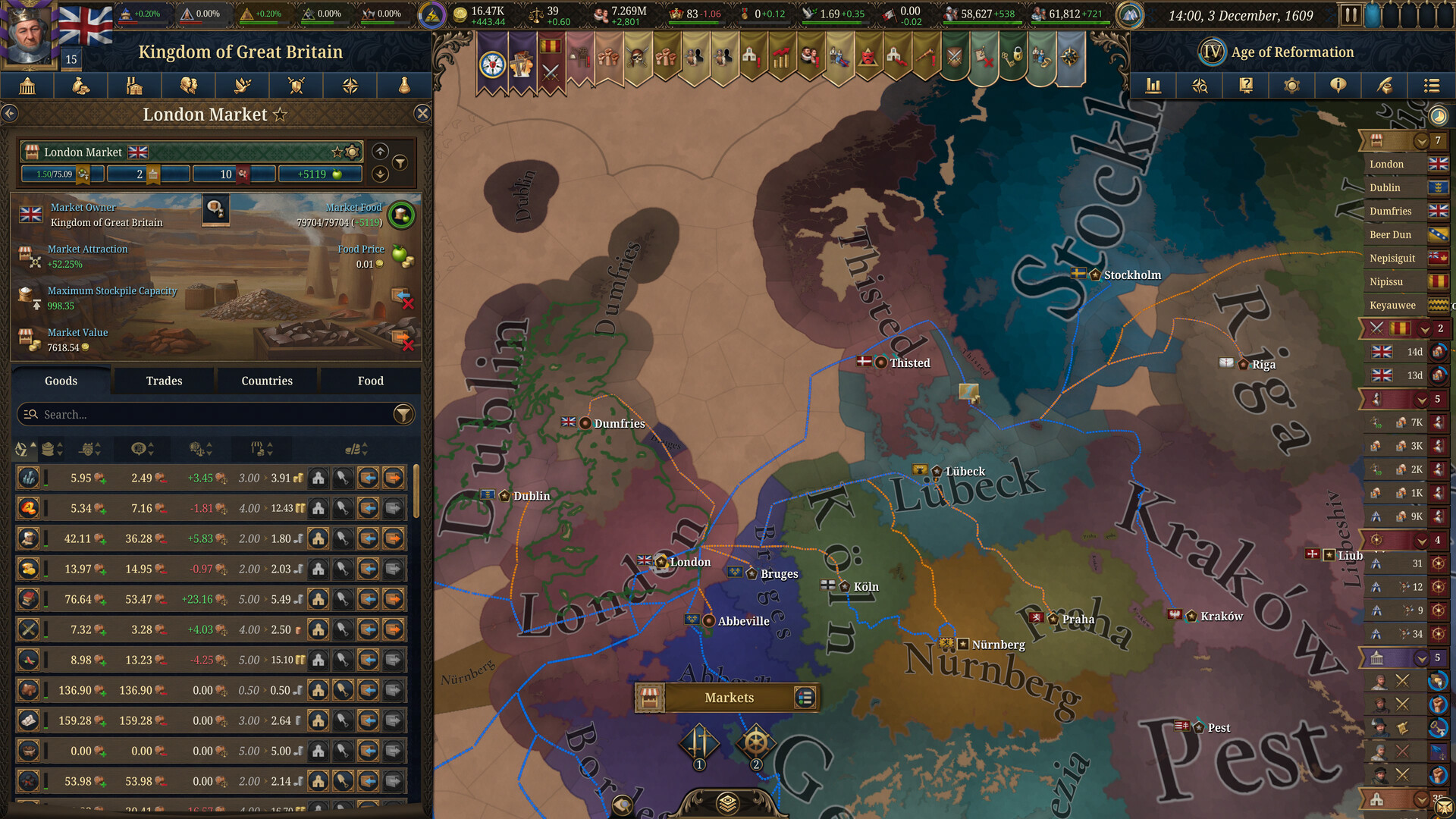
Source: Paradox Interactive, official EU5 Steam screenshot Trade ties directly into the economy, so pair this guide with how the economy basics work and the EU5 trade changes arriving in update 1.4.
How Trade Works in EU5
The core concept is that goods are produced in provinces and flow through trade routes to where they’re needed. The key difference from EU4 is that EU5 uses a more dynamic trade system based on supply and demand, rather than EU4’s static trade nodes. Goods flow along routes based on what’s being produced and what’s being consumed, which means trade patterns can shift over time as economies change.
The key thing to understand is that trade is about connecting production to demand. Provinces produce goods, and those goods flow to places where they’re needed. Your job as a ruler is to position yourself to capture value from that flow. If you’re coming from EU4, you can see how the old trade node network worked visually with our interactive trade node map.
Source: Paradox Interactive, Development Diary 3 - Trade & Economics
Merchants
Merchants are your agents in the trade system. They’re assigned to trade routes and trade centers, and they help you capture more value from the goods flowing through your realm. Merchants are obtained through trade-related buildings, ideas, and certain nation bonuses.
The basics:
- Assign merchants to the most valuable trade routes you have access to
- Merchants in your home region are more effective than those far away
- You can move merchants between routes, but there’s a cooldown
Building a Trade Economy
Here’s a practical approach to building a strong trade economy as a beginner:
1. Focus on your home region first. Before you expand trade networks abroad, make sure your home region is well-connected. Build trade buildings in your capital and key provinces.
2. Control production. Trade is only as valuable as the goods being produced. Invest in production buildings in provinces with valuable goods: cloth, wine, iron, and other high-value resources.
3. Expand into trade routes. As you conquer territory, look for provinces that sit on important trade routes. Controlling the route is often more valuable than controlling the production.
4. Use your merchants wisely. Don’t spread your merchants thin. Focus them on the 2-3 most valuable routes and move them only when you have a clear reason.
Source: Paradox Interactive, Tinto Talks 124 - Economy, Trade & Tariffs
Common Beginner Mistakes
- Ignoring trade entirely. Trade income can be a huge portion of your economy. Even a small investment in trade buildings pays off.
- Spreading merchants too thin. One merchant on a minor route is worth less than two merchants on your best route.
- Not building production. Trade without production is like a shop with nothing to sell. Build both.
- Expanding into poor trade territory. Not all conquests are equal. Prioritize provinces that add trade value.
Trade in EU5 is a system that rewards attention. You don’t need to master every detail to benefit. Just understand that production feeds trade, trade feeds income, and merchants are your tools for capturing that income. Build your home economy first, expand into good trade territory, and keep your merchants focused on the best routes.
As you play more, you’ll develop a feel for which routes are worth fighting for. But for now, these basics will keep your economy healthy while you learn the rest of the game.