Best Starting Nations for New Players in EU5
Picking your first nation in EU5 is a big decision. Pick someone too weak and you’ll be crushed. Pick someone too complex and you’ll be overwhelmed. The sweet spot is a nation that’s strong enough to survive your mistakes but simple enough to learn the game. Here are the best starting nations for new EU5 players, based on what the community has learned since launch.
Source: Paradox Interactive, official EU5 Steam screenshot Once you have picked a starting nation, use it on the interactive EU5 New Player’s Path to learn the game one stage at a time, and check the societal values guide to understand what shapes your country early on.
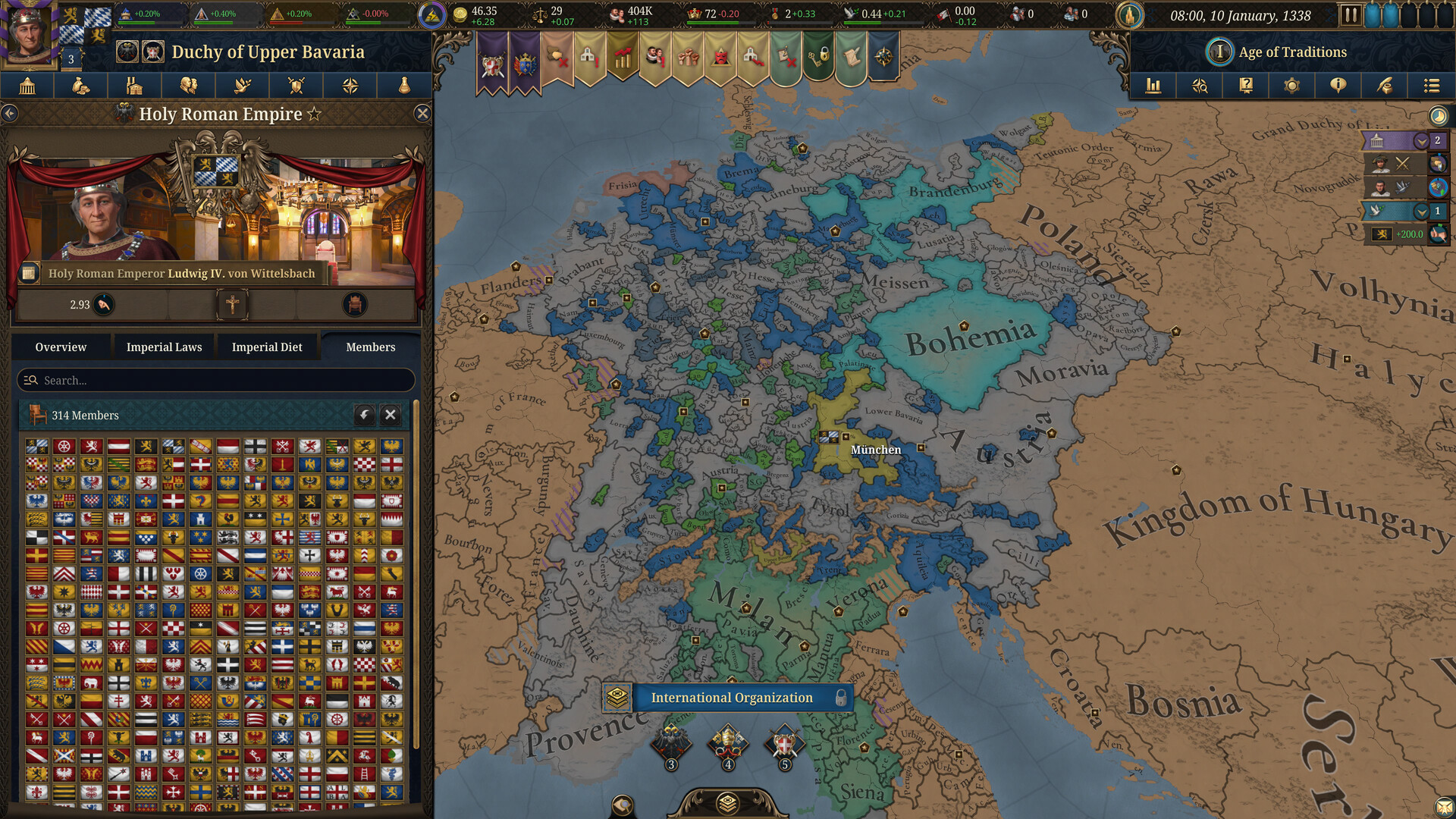
The Safest Pick: Hungary
Many current guides rank Hungary as the single safest starting nation for new players, and it’s easy to see why:
- Land-focused and forgiving. Hungary is a land-based power with no naval complexity to worry about. You learn the core systems: economy, military, expansion. No juggling fleets.
- Strong starting position. Hungary sits in the middle of Europe with plenty of expansion room in the Balkans and against weaker neighbors.
- Teaches core systems well. Hungary’s position lets you learn diplomacy, war, and internal management at your own pace, without the pressure of being a major power.
The downside is that Hungary isn’t flashy. But for learning the game, that’s exactly what you want.
Source: Paradox Interactive, official EU5 Steam screenshot
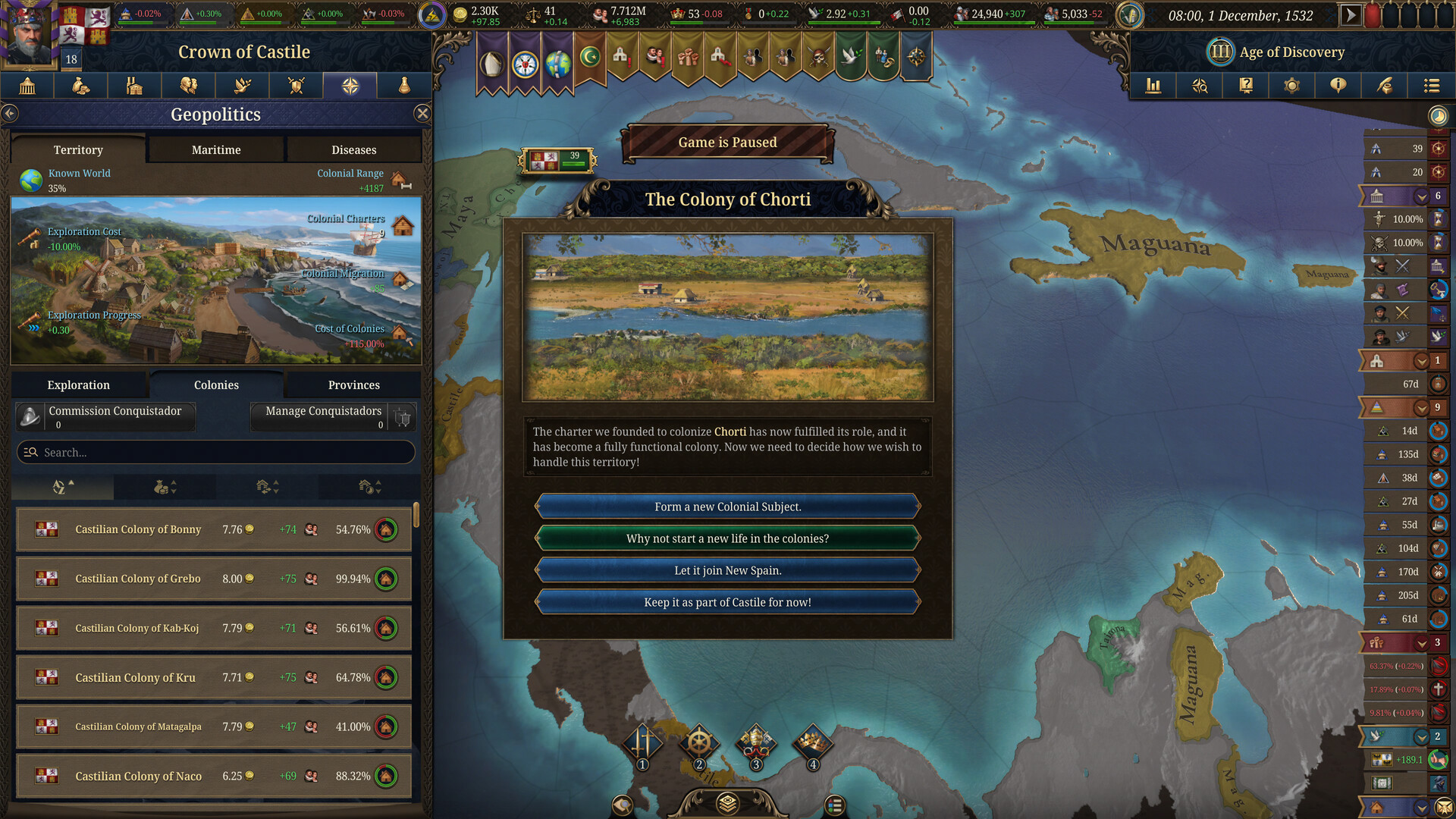
The Tutorial Pick: Portugal
Portugal has been the classic beginner nation since EU4, and it remains a great choice in EU5:
- Safe position. Portugal is on the edge of Europe, protected by the ocean and its neighbors. No one can easily invade you.
- Clear goals. Portugal’s path is obvious. Expand overseas, build a colonial empire, and dominate trade.
- Strong economy. Portugal has access to good trade routes and can build a strong trade economy early.
The Portugal run is straightforward: build your economy, colonize the New World, and become a trade power. It’s the closest thing the game has to a guided campaign.
Source: Paradox Interactive, official EU5 Steam screenshot
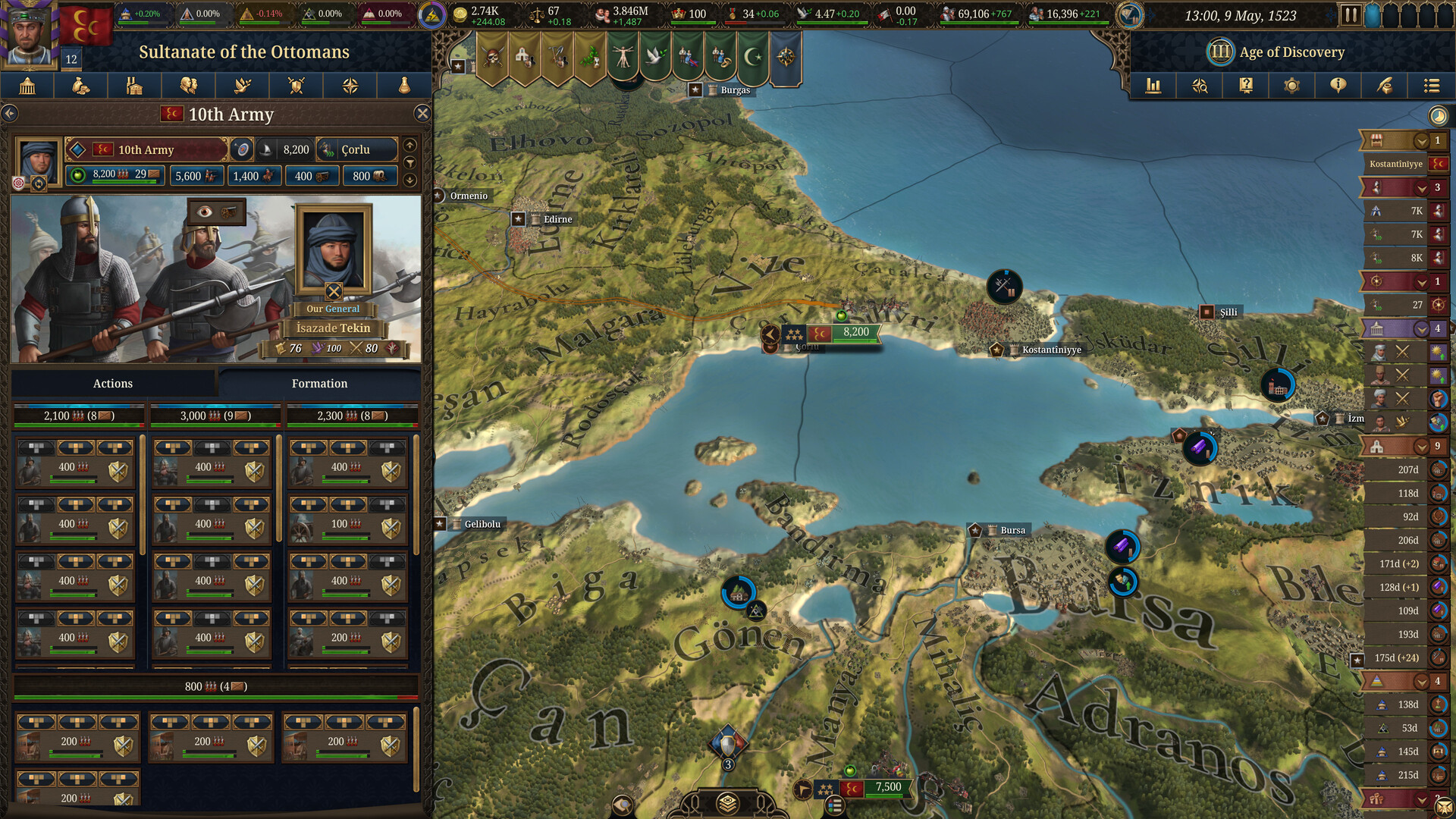
The Expansion Pick: The Ottomans
The Ottomans are frequently recommended for new players, but not because they’re the strongest nation in the game. EU5 starts in 1337, much earlier than EU4’s 1444, and the Ottomans begin with less territory than their EU4 incarnation. What makes them great for beginners is their neighbors:
- Weak neighbors. The Ottomans are surrounded by smaller, weaker states that are ripe for conquest. You can expand steadily while learning the ropes.
- Strong military traditions. The Ottoman military is still excellent, giving you a comfortable edge in early wars.
- Expansion in every direction. Europe, the Middle East, and North Africa are all open to you.
The key difference from EU4: the Ottomans are a strong starter nation because of their opportunities, not because they start near-total. It’s a satisfying rags-to-empire experience.
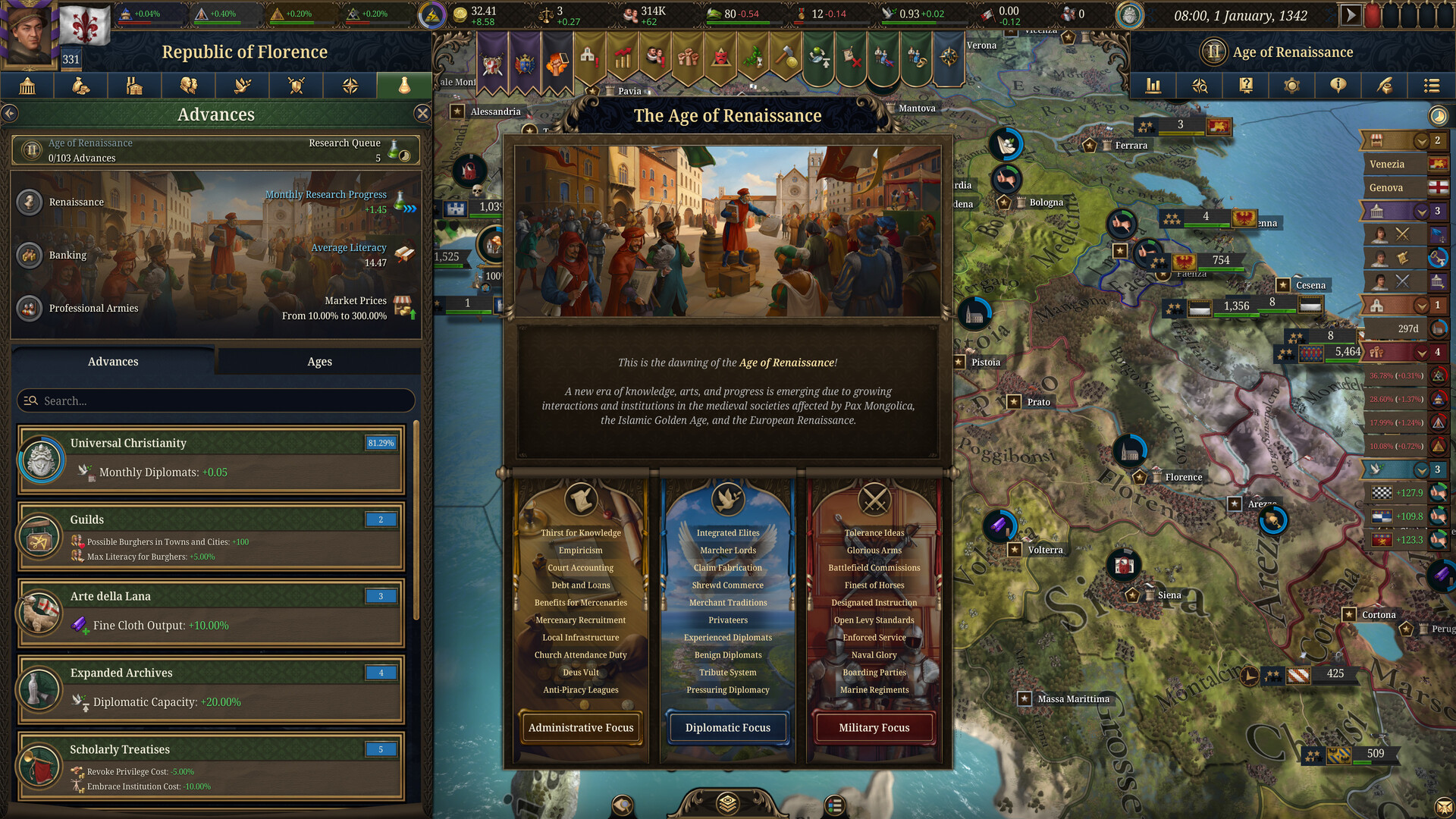
The Trade Pick: Venice
Venice is a small but wealthy nation, and it’s a great pick for beginners who want to focus on trade:
- Trade powerhouse. Venice is one of the richest trade nations in the game.
- Small and manageable. Venice is a small nation, which means less to manage while you learn.
- Clear focus. Venice’s path is clear. Dominate trade in the Mediterranean.
The downside is that Venice is small and surrounded by larger powers. You’ll need to be careful with your diplomacy.
Source: Paradox Interactive, official EU5 Steam screenshot
The Second Campaign Pick: France
France is a great nation, but it’s usually recommended as a second campaign, not a first. Here’s why:
- Major power pressure. As one of Europe’s largest nations, France draws constant attention. Coalitions, rivalries, and diplomatic pressure come early.
- Complex management. A large realm means more provinces, more pops, and more internal systems to manage while you’re still learning.
- Strong when you’re ready. Once you understand the basics, France is one of the most powerful nations in the game. You can dominate Europe.
If you’re coming from another Paradox game and feel confident in the fundamentals, France is excellent. If this is your first grand strategy game, save it for campaign number two.
What to Look For in a First Nation
If you don’t want to pick one of these specifically, here’s what to look for:
- A safe position. You want room to make mistakes without being crushed.
- A clear path. Whether it’s colonization, trade, or conquest, a defined goal gives you direction.
- A manageable size. A medium-sized nation is easier to manage than a sprawling empire.
- A strong economy. A good economy gives you room to recover from errors.
For your first EU5 campaign, pick Hungary if you want the safest, most forgiving learning experience. Pick Portugal if you’d rather learn through colonization and trade. Once you’re comfortable with the basics, try France for a more powerful, more demanding campaign, or The Ottomans for steady expansion.
The key is to pick a nation that gives you room to learn. You’ll have plenty of time to play the hard starts once you know what you’re doing.