How Estates Work in EU5 and Why They Matter
New to EU5? This guide is part of the EU5 New Player’s Path. If you are just starting, follow the Path in order instead of jumping between systems.
Estates are one of the most important internal systems in EU5, and one of the most different from EU4. In EU4, estates were a side system you interacted with occasionally. In EU5, they’re central to how you manage your realm. Here’s what you need to know.
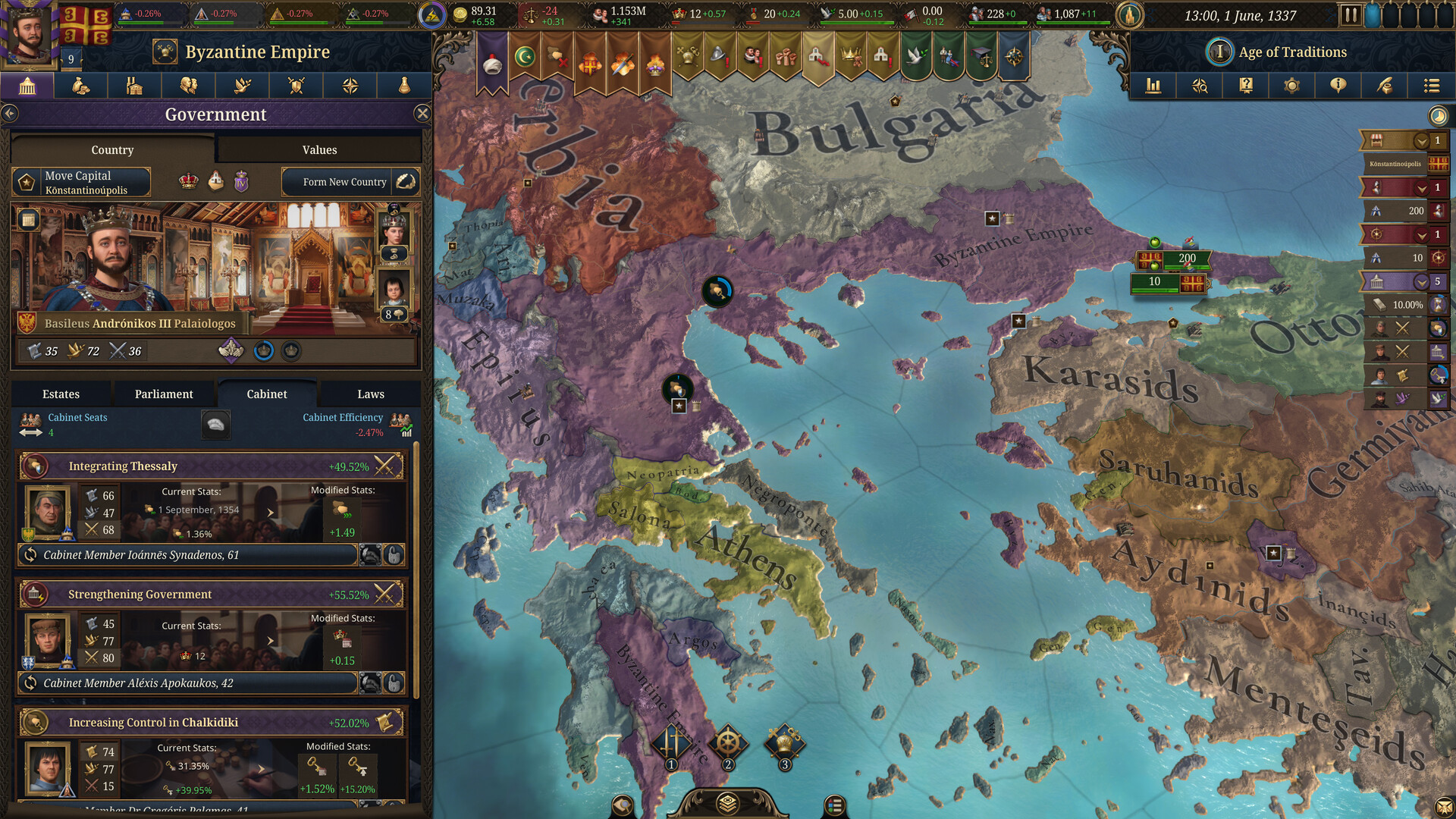
Source: Paradox Interactive / Europa Universalis V official screenshots
What Are Estates?
Estates are the powerful social groups within your realm: the nobility, clergy, burghers, and other classes who hold power and influence. They have their own interests, their own demands, and their own ways of helping or hindering you. EU5’s estate system is deeper than EU4’s, with more estates, more interactions, and more meaningful consequences.
Why Estates Matter
Estates aren’t optional. You can’t ignore them. They control significant portions of your realm’s economy and military. How you manage them determines whether your realm is stable and prosperous, or beset by rebellion and infighting.
What estates provide:
- Nobility: military power, generals, and manpower
- Clergy: stability, conversion, and legitimacy
- Burghers: trade income, tax revenue, and economic growth
Each estate provides these bonuses at full strength when they’re loyal, and withholds them, or worse, actively opposes you, when they’re unhappy.
Estate Influence
Each estate has an influence level: how much power they wield in your realm. Influence is affected by:
- Privileges: granting an estate privileges increases their influence
- Actions: some actions increase or decrease estate influence
- Events: events can shift the balance of power between estates
High influence means the estate can demand more from you and is harder to control. Low influence means they’re weaker but also less helpful.
Estate Loyalty
Estates also have a loyalty level: how happy they are with your rule. Loyalty is affected by:
- Privileges: granting privileges makes an estate more loyal
- Actions: fulfilling their demands increases loyalty; ignoring them decreases it
- Events: events can change estate loyalty
High loyalty means the estate provides their bonuses at full strength. Low loyalty means they withhold their support, and may even support rebels or refuse to pay taxes.
The Privilege System
Privileges are the main tool for managing estates. Each privilege grants an estate more power and influence in exchange for a bonus to your realm.
The trade-off: Privileges are useful because they give you bonuses, but they’re hard to revoke. Grant a privilege and the estate’s influence grows, making them harder to control. Grant too many privileges and you’ve created a monster.
How to use privileges wisely:
- Grant privileges that give bonuses you actually need
- Don’t grant privileges casually. Think about the long-term influence cost
- Revoke privileges when you can afford the loyalty hit
Estate Agendas
Estates have agendas: tasks they want you to complete. These are marked in the estate interface, and completing them is almost always worth it.
Why agendas matter:
- Completing an agenda improves estate loyalty
- Agendas give you clear goals and direction
- They’re often easy tasks like “build a church in this province” or “win a war against this rival”
Managing Estates Effectively
1. Don’t let one estate dominate. A nobility with too much influence can challenge your authority. Keep estates balanced.
2. Grant privileges strategically. Privileges give estates more power in exchange for bonuses. They’re useful, but they’re hard to revoke. Don’t grant privileges you’ll regret.
3. Complete estate agendas. Agendas are easy bonuses. Completing them improves loyalty and prevents problems.
4. Watch the balance of power. If one estate becomes too powerful, take actions to reduce their influence, even if it makes them unhappy in the short term.
Common Mistakes
- Ignoring estates entirely. Ignored estates become disloyal, which means lost bonuses and potential rebellion.
- Granting too many privileges. Privileges are a slippery slope. Each one makes the estate harder to control.
- Letting one estate dominate. A single dominant estate is a threat to your authority.
- Not completing agendas. Agendas are easy bonuses. Ignoring them wastes free value.
Estates are the internal politics of EU5. They’re not a side system. They’re central to how your realm functions. Manage them well, and they’ll be your strongest supporters. Manage them poorly, and they’ll be the greatest threat to your rule.
The key is balance: keep your estates happy enough to provide their bonuses, but not so powerful that they can challenge your authority. Get this right and your realm stays stable through even the hardest wars. Get it wrong and you’ll be dealing with internal crises on top of everything else.