EU5 Army Composition Basics: A Beginner's Guide
New to EU5? This guide is part of the EU5 New Player’s Path. If you are just starting, follow the Path in order instead of jumping between systems.
Building and managing an army in EU5 is different from EU4 in one crucial way: EU5 uses a dual army system with levies and professional troops. Understanding the difference between these two forces is the most important thing a beginner needs to know about EU5 combat. Here’s how it works. And if you would rather experiment than read, the interactive EU5 Army Battle Lab lets you build a force against an AI opponent and see exactly how it performs.
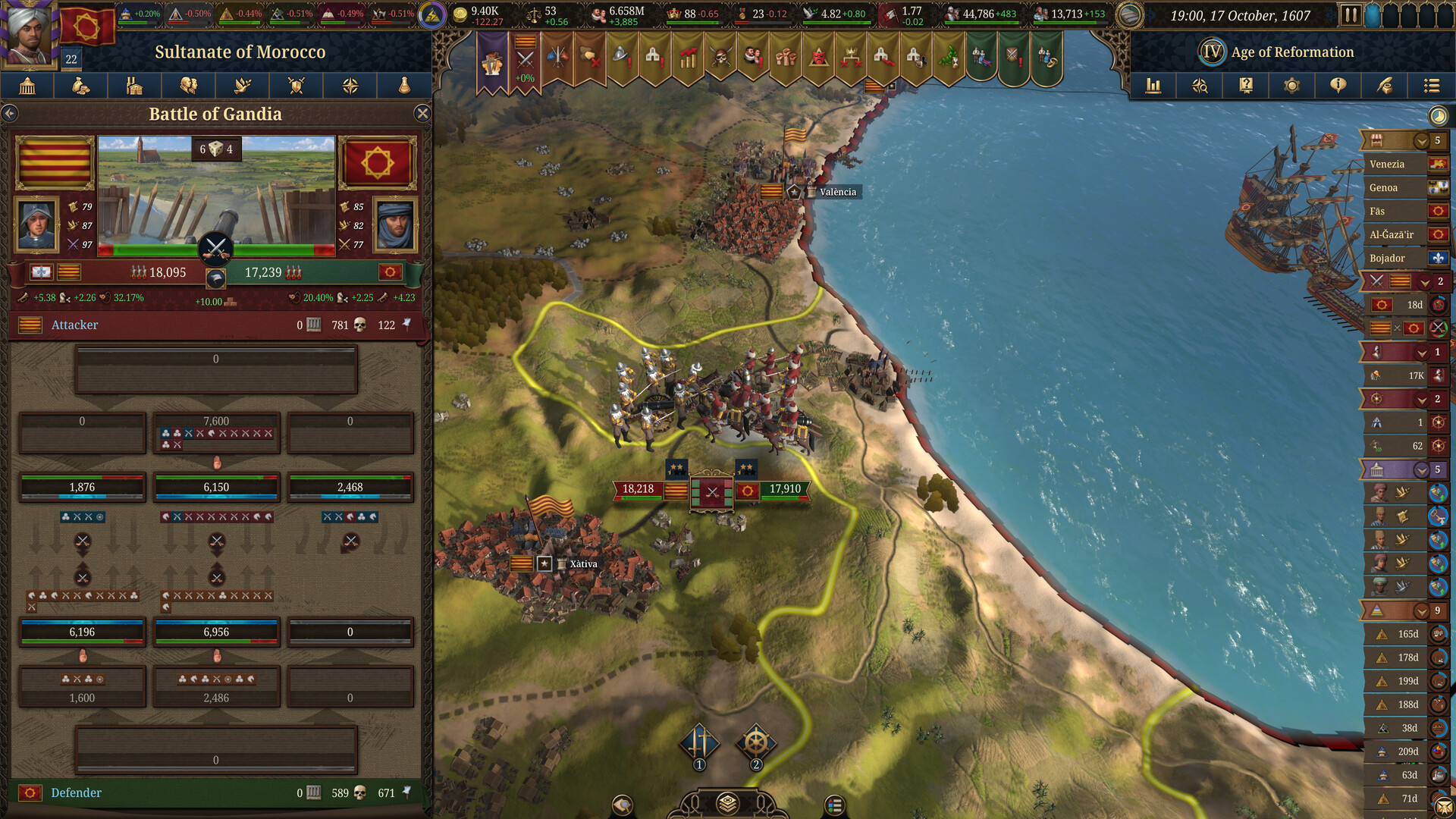
Source: Paradox Interactive, official EU5 Steam screenshot
The Two Armies: Levies and Professionals
Levies are the citizen militias that rally to your banner when you go to war. They’re the bulk of your early army, and they have distinct characteristics:
- They’re temporary. Levies are summoned when war breaks out and disband when it ends.
- They’re plentiful but weak. You can raise large numbers of them, but they’re poorly trained and equipped compared to professionals.
- They spawn from your provinces. Your levy pool comes from your population, so a larger population means more levies.
- They’re cheap. Levies cost little to maintain during war, which makes them attractive for early-game economies.
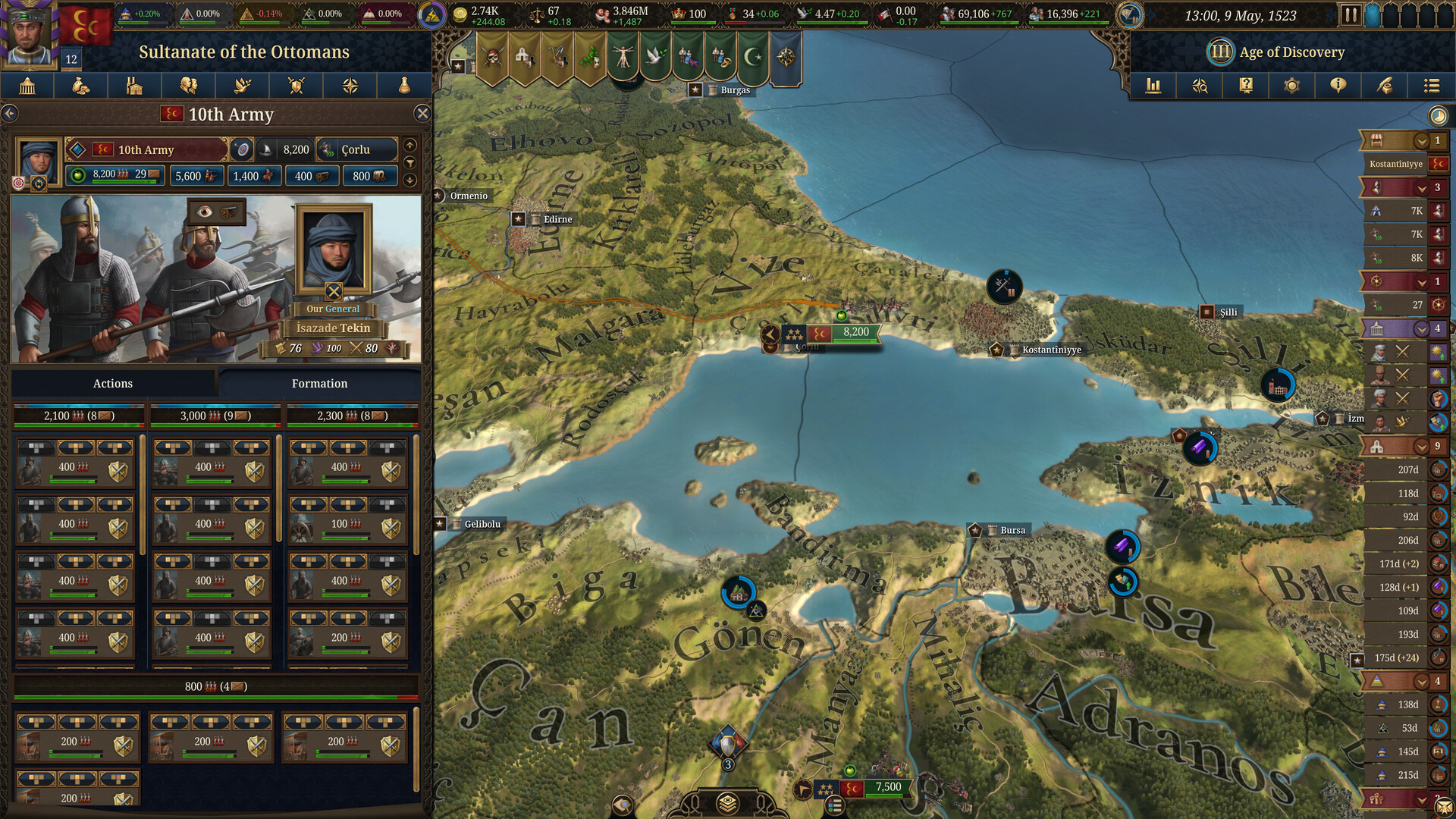
Source: Paradox Interactive, official EU5 Steam screenshot
Professional troops are your standing army. Trained, equipped, and always ready:
- They’re permanent. Professionals stay in your army during peace and war alike.
- They’re expensive. Professionals cost significantly more to maintain than levies, both in gold and in upkeep.
- They’re reliable. Professionals fight far better than levies, with higher discipline and morale.
- They’re limited by your economy. You can only maintain a certain number of professionals based on your budget and military infrastructure.
Why This Matters
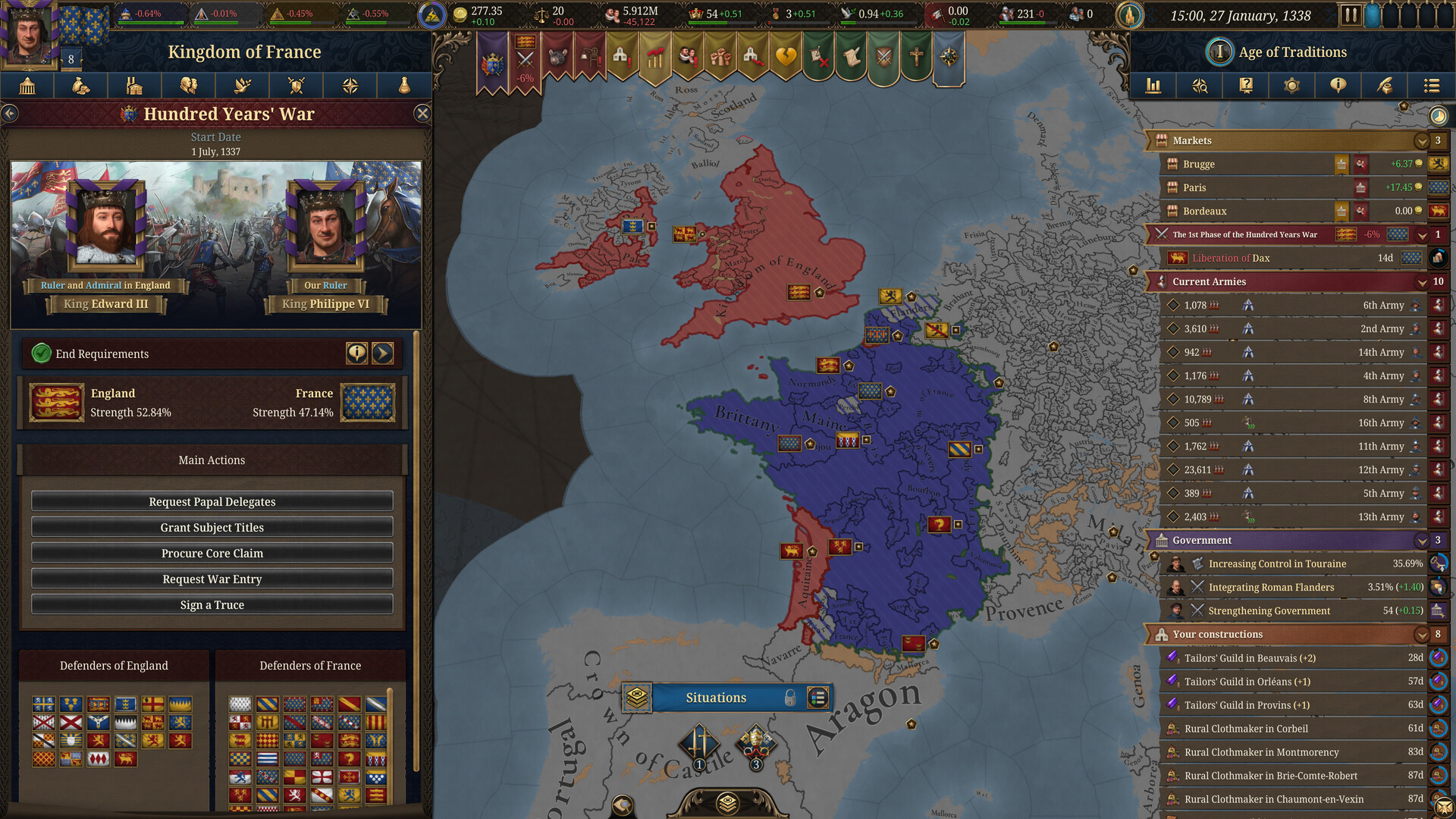
Source: Paradox Interactive, official EU5 Steam screenshot
The levy/professional split changes how you think about war in EU5:
Early game. You’ll rely mostly on levies, with a small core of professionals. Your army is large but fragile. You can win wars, but you need to win them quickly before your levies’ morale collapses or they take unsustainable casualties.
Mid game. As your economy grows, you transition toward a professional core. Your armies get smaller but stronger. You can fight longer wars because your professionals don’t disband.
Late game. A fully professional army is the goal. It’s expensive to maintain, but it’s the most reliable fighting force in the game.
Building Your Army
With the two-army system in mind, here’s what a balanced military looks like:
Early game:
- A small professional core (a few thousand men)
- Large levy armies raised for specific wars
- Accept that your levies are expendable. They’re there to win the war, not to survive
Mid game:
- A growing professional army as your backbone
- Levies used as auxiliary forces or for defensive wars
- Invest in military buildings that improve both your levy pool and your professional capacity
Late game:
- A fully professional army as your main force
- Levies kept as a reserve for emergencies
- Professional armies are expensive, but they win wars
Managing Your Military
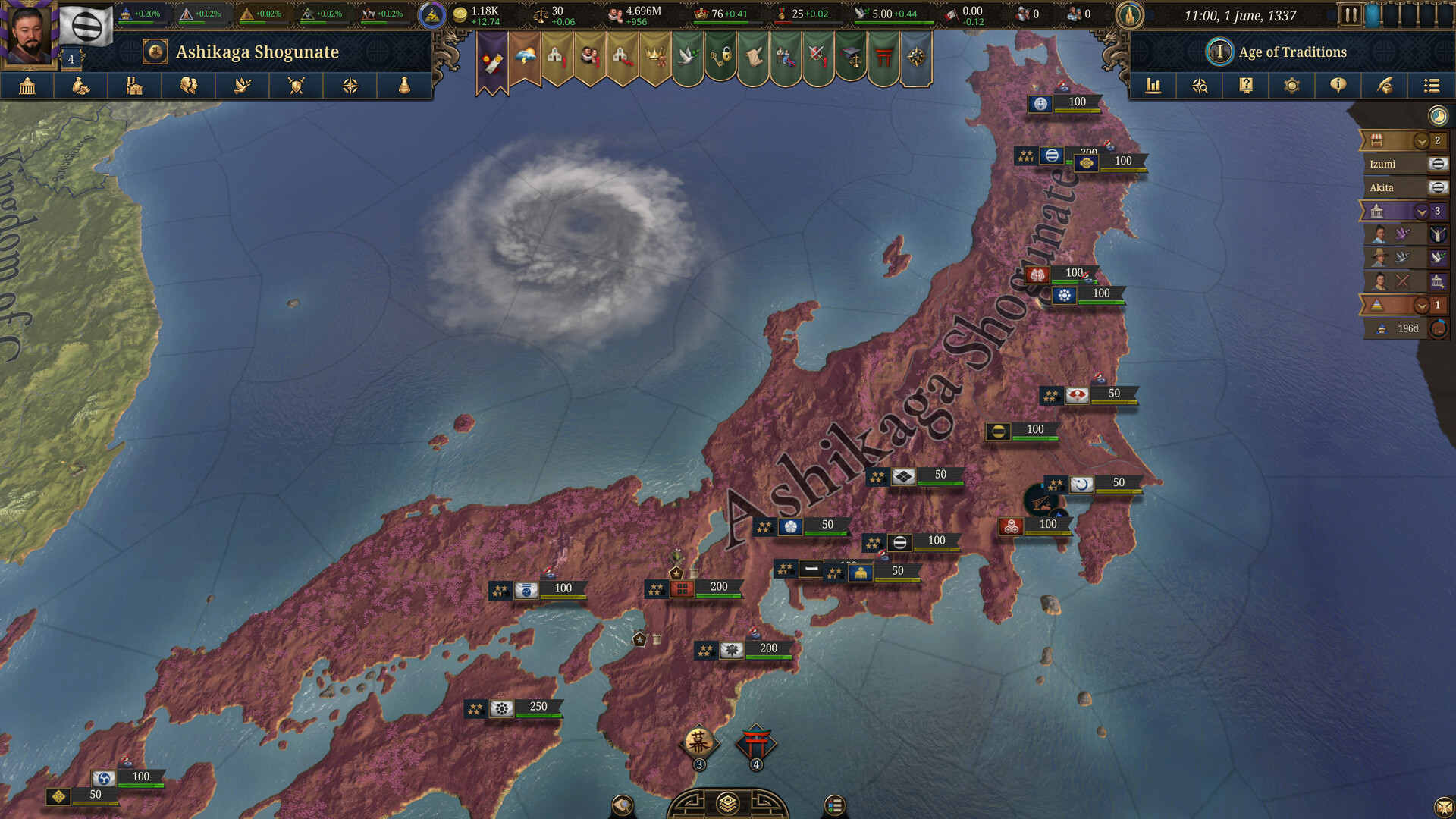
Source: Paradox Interactive, official EU5 Steam screenshot
1. Don’t waste your professionals. Professional troops are expensive to replace. Use them for decisive battles, not for garrison duty or siege support.
2. Levies are expendable, use them that way. Levies are there to absorb casualties and win wars. Don’t be precious with them.
3. Watch your economy. A professional army can bankrupt you if you build it too fast. Grow your professional core as your economy allows.
4. Use terrain and tactics. Defending in mountains or across rivers gives you a massive bonus. Let the enemy attack you in bad terrain, regardless of which army type you’re using.
Common Beginner Mistakes
- Treating levies like professionals. Levies are not your real army. They’re a force multiplier. Don’t expect them to fight like trained soldiers.
- Building too many professionals too early. A professional army is expensive. Build it as your economy grows, not before.
- Ignoring your levy pool. Even in the late game, levies are useful as reserves. Don’t let your levy pool sit unused.
- Forgetting maintenance. At peace, lower your maintenance costs. Raise it to full before going to war.
The levy/professional system is the defining feature of EU5’s military. Learn to use both forces effectively. Use levies for scale and expendability, professionals for quality and reliability. As your economy grows, transition toward a professional core while keeping your levies as a reserve.
The key insight: EU5’s military is about resource management, not just army composition. You’re managing two different forces with different costs, different strengths, and different roles. Master both, and you’ll have a military that can handle anything.
Try It Yourself
Want to see how composition decisions play out? Our EU5 Army Battle Lab gives you and an AI opponent the same 100-point budget to build armies, then fights the battle and explains what happened. It is a great way to feel why Regulars beat Levies and why Artillery changes the opening.