EU4 Trade Companies Explained
Trade companies are one of those EU4 systems people keep reinventing the wrong way. Confusion about them turns up consistently from 2014 through 2024, a full decade, with the same recurring questions: how do you actually create one, should that distant colony become a trade company or a full state, and what are the real benefits and tradeoffs. This article is the third piece in a set with the interactive trade node map and the trade power guide, and it answers the question those first two leave open: what do you actually do with overseas territory once you understand how the network and its merchants work.
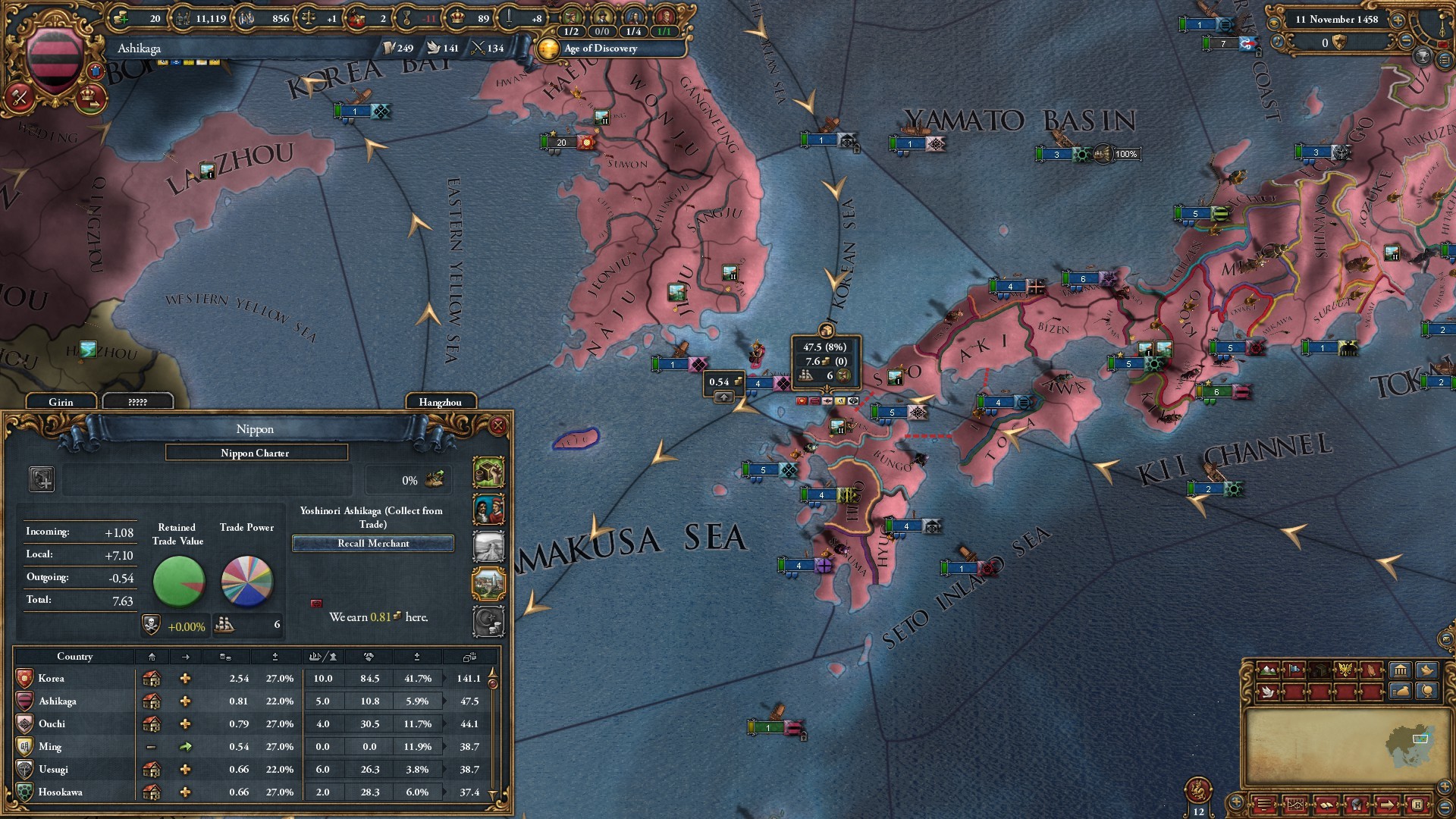
Source: Paradox Interactive / Europa Universalis IV official screenshots
What a trade company actually is
A trade company is a collection of provinces in a designated trade company region. Compared to including those same provinces in a state or a territory, a trade company gives you less tax, manpower, and sailors, but more trade power, more trade goods including production income, and more naval force limit. It also eats less governing capacity than a state would.
That last point deserves a direct correction while we’re here. An older, frequently-repeated player claim says production income is untouched by trade company status. The current wiki page states the opposite: trade companies actually increase trade goods and production income compared to full statehood. This guide sides with the wiki on that one, since we leaned on the current wiki page over older forum comments wherever the two disagree.
Who is eligible
The rules are specific. Only provinces on a different subcontinent from your capital can be part of a trade company. Trade company regions don’t include the Americas at all, colonial nations handle those instead. A province can’t be part of a state and a trade company at the same time, so only provinces not currently in a state are eligible to be added, and if a province already in a trade company later becomes part of a state, it gets automatically removed.
To create one, you can add eligible provinces all at once through the trade node’s own interface, or province by province through each province’s own interface.
One thing to know before you start
Trade companies require the Wealth of Nations DLC at minimum. If you don’t own it and you’ve been hunting for the trade company option without finding it, that’s why. You’re not missing something, the feature itself is locked behind that DLC, a fact confirmed directly by players who bought it specifically to unlock the feature.
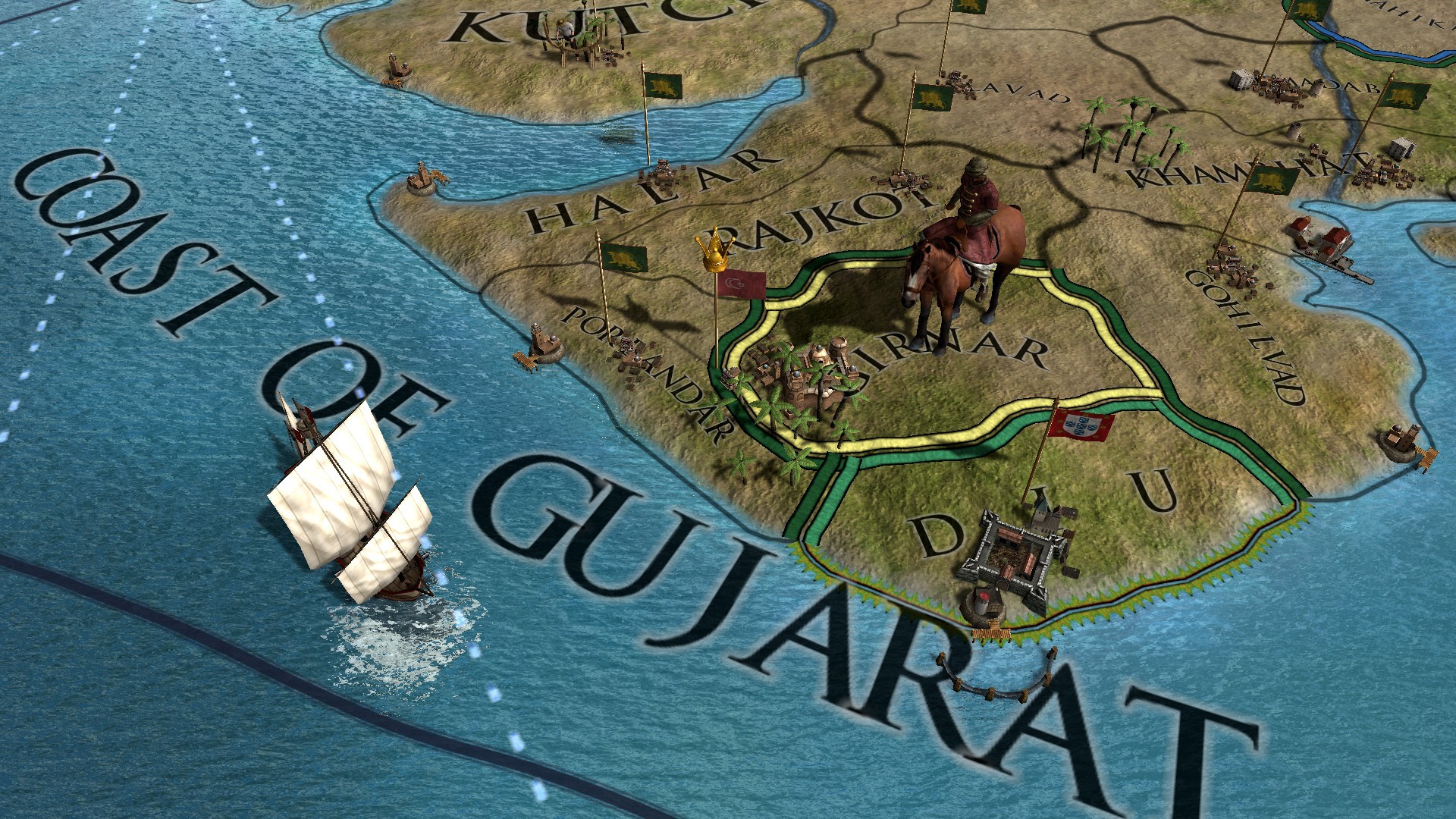
Source: Paradox Interactive / Europa Universalis IV official screenshots
The 51% merchant threshold
Here’s the most repeated, most concrete fact in all the discussions: once trade company provinces control more than 51% of the total trade power in that trade company’s region, the owner gains an additional merchant. Players have confirmed this independently years apart, in 2017 and again in 2024.
That single threshold is a genuinely strong incentive on its own. It explains why experienced players obsess over pushing a region over the halfway mark. A bonus merchant is a big deal, and reaching it turns an ordinary overseas region into something you actively want to grow.
The scaling bonus that almost nobody explains
There’s a mechanic most guides skip entirely, and it’s one of the most underexplained parts of the whole system. Trade companies give a scaling goods-produced bonus to every province in that trade company region that is NOT itself part of a trade company, regardless of who owns it.
Here’s what actually drives it. The size of that bonus scales with what percentage of the region’s total trade power sits inside trade companies, and with how many institutions the trade-company-forming nation has embraced. So the bonus grows stronger later in the game, as your trade power share climbs and you embrace more institutions.
This deserves far more attention than it usually gets, because it changes the calculus on what you do with territory you don’t control. Pushing trade company share in a region isn’t just about your own provinces. It silently boosts production everywhere in that same region, even in provinces owned by other nations.
A common misconception about Expand Overseas
The generic Expand Overseas mission requires owning at least 5 provinces in each of three separate trade company regions, 15 total. Here’s the part the mission’s own wording gets wrong: those provinces do not need to actually be organized into trade companies to satisfy the requirement. Simply owning them in those regions is enough.
This is a real, repeated point of confusion, and it costs people real effort. Players over-convert provinces into trade companies unnecessarily, chasing a requirement they already met, just because the mission text implies it. Own the land in the right regions and the mission counts it.
Source: Paradox Interactive / Europa Universalis IV official screenshots
Trade company or full state
The consistent community answer across years of threads is that trade companies are generally the better choice when a province is culturally or religiously different from your main group, geographically distant from your capital, or not valuable enough on its own to justify full integration. Full statehood makes more sense for closer provinces that are easy to integrate and genuinely worth the state slot.
There’s a well-established practical tip that goes with that. Convert a province’s religion or culture before adding it to a trade company, not after. Players consistently describe a heavier conversion penalty for provinces already inside a trade company. I’ll flag this as practical advice rather than a precise mechanic, since the exact penalty size isn’t independently confirmed on the wiki, but it’s repeated often enough that it’s worth taking seriously.
One risk to know about
There’s a negative event-driven country modifier called Trade Company Trouble that reduces trade efficiency by 10% for a period of years. The wiki page describing it is tagged by the wiki’s own editors as potentially outdated, referencing an older patch, so the exact odds and duration aren’t guaranteed current numbers. Treat it as a warning that trade company life has occasional headaches, without taking those specifics as gospel.
What it means for your campaign
The full three-part picture now goes like this. The trade node map shows you the shape of the network. The trade power article explains how power and merchants move value inside it. This piece covers what to do with the territory once you’re out there expanding. Trade companies tie most of that logic together, since the whole point of building a trade empire is to control and steer more value through the network.
If you’re running a nation far from home, look hard at the trade company option before reaching for the state button. The extra merchants, the trade dominance, and the scaling goods bonus usually outweigh what you’d otherwise get from stating. Combined with the steering chains from the trade power guide, a well-run set of trade companies feeds a very healthy home economy.