Crusader Kings 3 Succession Laws Compared
Succession is the thing that ends more CK3 campaigns than any war. You build a great kingdom, your ruler dies, and suddenly your realm is split between your sons like a pizza. Understanding succession laws, and how to work around them, is the difference between a dynasty that grows and one that collapses every generation.
Source: Paradox Interactive / Crusader Kings III official screenshots Succession planning only matters if you can get a strong dynasty going first, which is why we also recommend the best starting character guide and the renown and prestige guide.
The Basics
Your succession law determines what happens to your titles when your ruler dies. The default for most starts is Confederate Partition, which is the worst one. As you progress through the game, you unlock better options through innovations and cultural traditions.
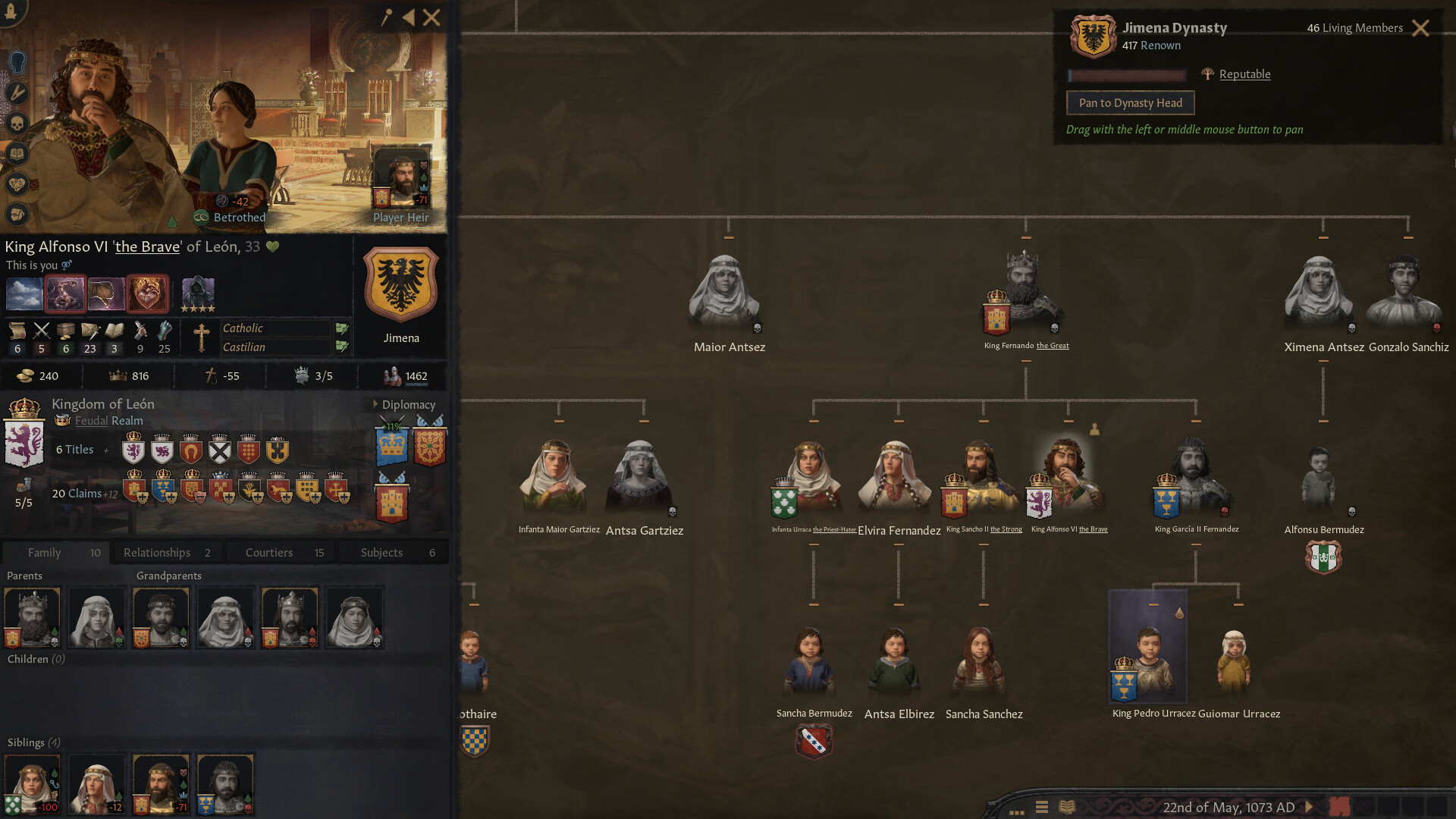
The key thing to understand is that succession is about titles, not just land. Your primary title (your highest-ranked title) goes to your primary heir. Your other titles get distributed among your other children. The more titles you hold, the more there is to split.
Source: Paradox Interactive / Crusader Kings III official screenshots
Confederate Partition
This is the default, and it’s the one that causes the most pain. Here’s how it works:
- Your titles are split equally among your eligible children
- New titles are created automatically to make the split “fair.” This is the killer. If you’re a king with one kingdom title and you have two sons, the game will create a second kingdom title for your second son, splitting your realm in two
- Your primary heir gets your primary title and the best share, but you’ll lose territory
When it’s good: Never, really. It’s the starting law and you should be working to get rid of it as soon as possible.
How to survive it: The classic strategies are:
- Have fewer children. Disinherit, take the celibacy decision, or just don’t have more kids than you need
- Give your spare sons titles before you die. If they already hold titles, they’ll inherit those instead of taking a share of your realm
- Kill your spare sons. It’s grim, but it’s a time-honored CK tradition
Partition
Partition is the upgrade from Confederate Partition, unlocked through the Hereditary Rule innovation. The difference:
- Your titles are still split among your children
- But new titles are NOT created automatically. If you’re a king with one kingdom title and two sons, your second son won’t get a new kingdom created for him. He’ll just get some of your duchies and counties
When it’s good: It’s a strict upgrade from Confederate Partition. You’ll still lose some territory, but you won’t have your realm split into multiple kingdoms.
High Partition
High Partition is the next step up, unlocked through the Royal Prerogative innovation. The key difference:
- Your primary heir gets at least half of your titles
- The rest is split among your other children
When it’s good: This is where succession starts feeling manageable. Your primary heir keeps the core of your realm, and you only lose the fringes. It’s a significant quality-of-life improvement.
Primogeniture
Primogeniture is the endgame of succession laws. Unlocked through the Late Medieval innovations, it’s the one you’re working toward:
- Your primary heir gets everything. All titles go to your firstborn (or your designated heir)
- No more splitting, no more losing territory on succession
When it’s good: Always. This is the goal. Once you have Primogeniture, succession stops being a crisis and becomes a non-issue.
Ultimogeniture
Ultimogeniture is the reverse of Primogeniture. Your youngest child inherits everything. It’s available in the same era as Primogeniture.
When it’s good: It’s a niche choice. Some players prefer it because your youngest child is likely to be younger when you die, meaning a longer reign. But it has the same problem as Primogeniture in reverse. You need to make sure your youngest child is actually the one you want.
House Seniority
House Seniority makes the oldest member of your dynasty inherit. It’s available through the Early Medieval innovations.
When it’s good: It’s a weird one. Your heir is unpredictable. It could be your uncle, your cousin, or your great-grandson. It’s useful if you want to keep the realm together and don’t care who runs it, but it makes long-term planning very difficult.
Elective Laws
Elective laws (Feudal Elective, Saxon Elective, etc.) let your vassals vote on who inherits. They’re available through various innovations and cultural traditions.
When it’s good: Elective laws are powerful if you can control the vote. If you have strong relationships with your electors, you can get your preferred heir elected, and you can use it to bypass the partition problem entirely. The downside is that if you lose control of the vote, you could end up with a random vassal on the throne.
Practical Tips
- Check your succession tab regularly. It shows you exactly what will happen when your ruler dies. Don’t be surprised on death day.
- Designate an heir. If you have the right cultural tradition or innovation, you can designate which child inherits your primary title. This is huge for controlling your succession.
- Disinherit problem children. It costs renown, but it’s often worth it to keep your realm together.
- The Partition problem is a feature, not a bug. The game is designed to make succession difficult. Working around it is part of the challenge.
Your succession law is one of the most important decisions in CK3. Start with Confederate Partition, work toward Partition and High Partition as you unlock innovations, and make Primogeniture your long-term goal. In the meantime, manage your family size, designate heirs when you can, and don’t be afraid to disinherit a troublesome son or two.