Best Religion in CK3 for Stability: Catholic, Orthodox, or Reformed?
Religion in CK3 isn’t just about roleplay. It’s a mechanical system that affects everything from vassal opinion to stress gain to how easily you can declare holy wars. Some faiths are dramatically better at keeping your realm stable than others. Here’s a breakdown of the best religions for stability, and what makes them good.
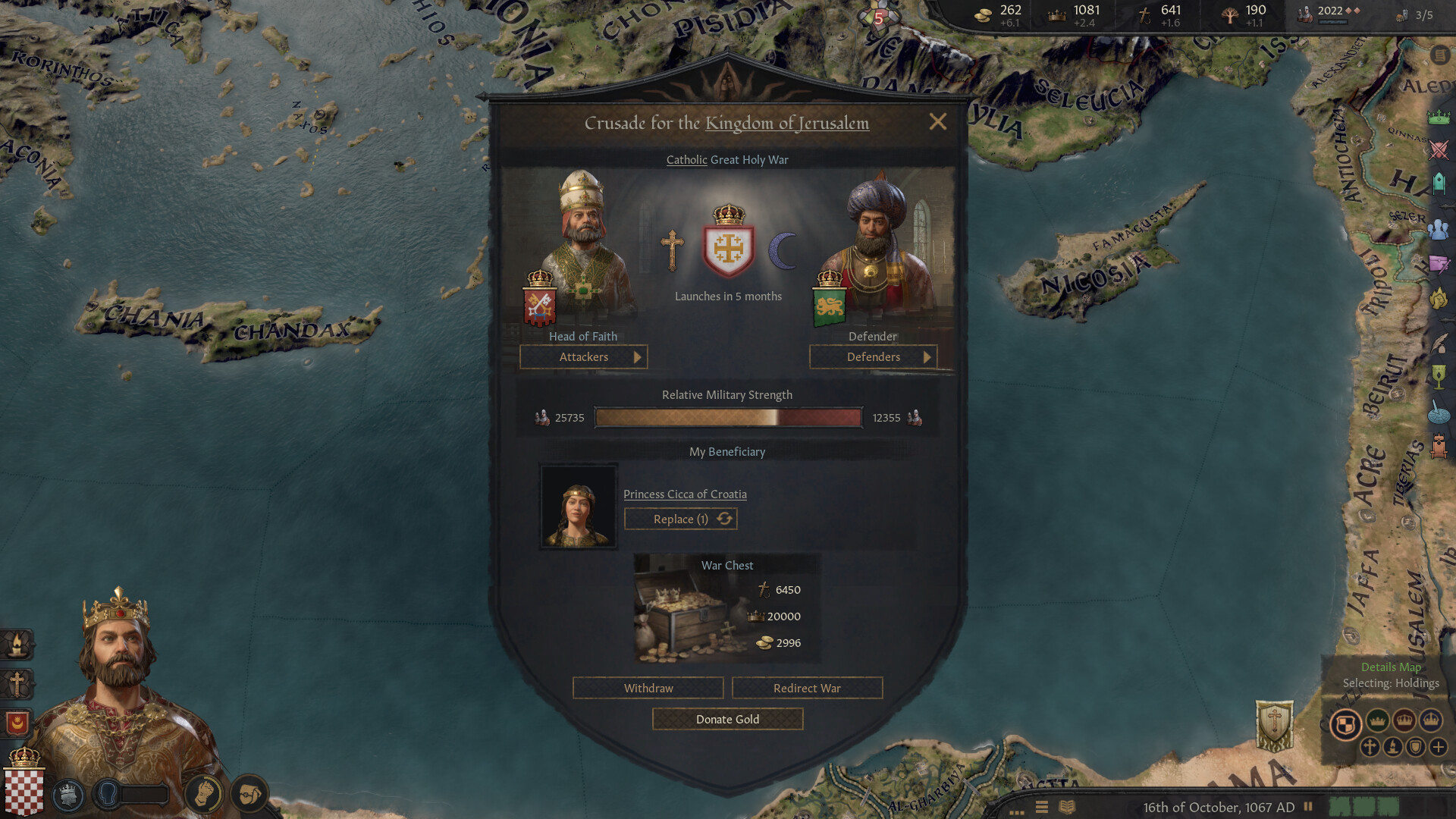
Source: Paradox Interactive / Crusader Kings III official screenshots
For a deeper look at how tenets, doctrines, and conversion actually work, see the site’s CK3 culture and faith mechanics guide. And if you’re planning ahead: when the By God Alone expansion ships playable theocracies, it changes what “church authority” means for every faith below.
What “Stability” Means in CK3
Before we get into specific faiths, let’s define what we’re optimizing for:
- Vassal opinion: happy vassals don’t rebel
- Stress management: low stress means your ruler doesn’t have a breakdown mid-campaign
- Succession stability: fewer succession crises
- Religious unity: fewer heretic uprisings and holy wars against you
A faith that’s good at these things is a faith that keeps your realm running smoothly.
Catholicism
Catholicism is the default for most European starts, and it’s genuinely one of the best for stability. Here’s why:
- The Pope. You can request gold, claims, and even excommunications from the Pope. Excommunicating a troublesome vassal gives you a free imprisonment reason. That’s a huge stability tool
- Crusades. The Pope can call crusades, which are a great way to get rid of problematic neighbors and give your spare sons something to do
- Wide cultural compatibility. Catholicism is the dominant faith in Western Europe, so you’ll rarely face religious revolts if you’re playing in that region
- The downside: The Pope can also excommunicate you, and he gets cranky if you’re too aggressive. But for most campaigns, the benefits outweigh the risks
Orthodoxy
Orthodoxy is the Eastern Christian faith, and it’s arguably even better for stability than Catholicism:
- The Ecumenical Patriarch is more controllable than the Pope. You have more influence over him, and he’s less likely to cause problems
- Autocephaly. You can make your own church head, which means you control excommunication. That’s a massive stability tool
- No crusades against you. The Orthodox don’t have crusades, which means fewer holy wars coming your way
The downside: Orthodoxy is less widespread than Catholicism, so if you expand into non-Orthodox territory, you’ll face religious revolts.
Islam (Sunni and Shia)
Islam is excellent for stability, particularly for conquest-focused campaigns:
- Jihad. Like crusades, jihads are a great way to redirect your aggressive vassals outward
- Religious head. The Caliph can grant claims and excommunicate, similar to the Pope
- Polygamy. This is a double-edged sword. More children means more succession problems, but it also means more alliance opportunities
- The downside: The Sunni/Shia split can cause internal religious tension if you’re not careful
The Reformed Pagan Faiths
This is where things get interesting. If you start as a pagan faith (Norse, Slavic, Tengri, etc.), you can reform it into a custom faith that’s tailored for stability. This is arguably the most powerful option in the game.
When you reform a pagan faith, you pick doctrines that shape it. For stability, you want:
- Temporal head of faith. You become the religious head, which means you control excommunication and can declare holy wars at will
- Lay clergy. Your priests are appointed by you, not by a religious head, which gives you more control
- Theocratic or Temporal leadership. Either works, but Temporal is more powerful
The beauty of reformed paganism is that you can build exactly the faith you want. Want a faith that makes your vassals love you? Pick doctrines that boost vassal opinion. Want a faith that lets you holy war everyone? Pick the right tenet.
The Tenets That Matter
Regardless of your faith, certain tenets are excellent for stability:
- Communion. Your vassals pay you gold for indulgences. It’s a money printer and it gives you a reason to interact with your vassals positively
- Monasticism. Reduces stress gain and gives you a way to deal with spare children. Send them to a monastery
- Pacifism. Reduces stress gain significantly, which is great for long reigns
- Warmonger. Increases your army size and makes your vassals happier when you’re at war. Great for conquest campaigns
For most players, Catholicism is the best starting faith for stability. It’s well-supported, has the Pope as a tool, and works well in the most common starting regions. Orthodoxy is a strong alternative if you’re in Eastern Europe or the Byzantine area.
If you’re willing to put in the work, reforming a pagan faith with the right doctrines is the most powerful stability option in the game. You get to design your faith around your playstyle, and the control you gain over excommunication and holy wars is unmatched.
The key takeaway: religion isn’t just flavor in CK3. It’s a tool. Pick a faith that gives you tools for stability, and your realm will be much easier to manage.